Mowing Route Density: The Complete Guide
Mowing route density is the difference between a route that prints money and one that bleeds it in fuel and windshield time. Here's how to measure it, price it, and build it.
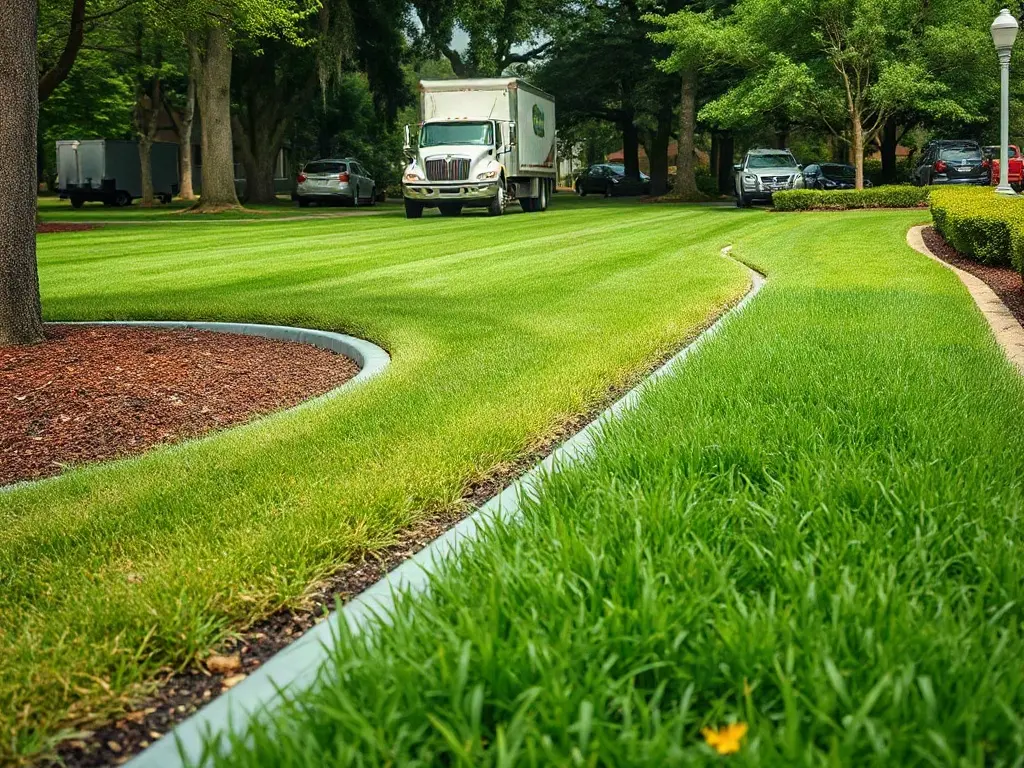
If two solo operators charge the exact same price per lawn, the one with tighter mowing route density takes home more money — sometimes a lot more. Same trucks, same mowers, same hourly labor. The difference is how far apart the stops sit. Loose routes bleed cash in fuel, drive time, and vehicle wear that never shows up on an invoice. Dense routes turn that wasted time back into billable mowing.
This is the guide I wish I'd had when I was driving 40 minutes between two $50 lawns and calling it a good day. We'll cover what route density actually is, the numbers that tell you whether yours is healthy, how to price for it, and — the part most operators skip — how to build it on purpose instead of hoping it happens.
What mowing route density actually means
Route density is how tightly grouped your paying stops are geographically. Most operators measure it one of two ways: accounts per mile driven, or how close consecutive jobs sit on a given day's route. A dense route is five lawns on the same street or in the same subdivision. A low-density route is five lawns scattered across three towns, connected by highway.
The reason this matters is simple math: every minute in the truck is a minute you're not billing. Windshield time doesn't earn anything. It just burns fuel and wears out equipment. When your stops are close together, you spend more of the day with a mower running and less of it staring at a windshield.
A practical benchmark from operator-focused routing content: a healthy residential mowing route lands around 2.0–3.0 stops per hour for a solo or efficient two-person crew, with miles between stops under 1.5 in suburban areas and under 0.7 in dense neighborhoods. If you're driving more than a mile and a half between average suburban lawns, your density is dragging your margins down whether you feel it or not.
Why route density is a profit lever, not a nice-to-have
Lawn-care guidance treats route density as one of the biggest profit levers in the business, and it's easy to see why once you put dollars on it. The same benchmark source targets roughly $100–$150 in revenue per labor-hour and $45–$75 per stop for a healthy residential route. Every hour you lose to driving is a hundred-plus dollars of capacity you can't get back.
Fuel is the obvious cost, and it's a real one — the U.S. Department of Energy notes that aggressive driving and excess time on the road quietly torch your miles per gallon and your budget. But fuel is actually the smaller piece. The bigger loss is opportunity cost: the lawns you didn't mow because you were in transit. Add in extra vehicle wear, more frequent maintenance, and crew fatigue, and a scattered route can quietly erase the margin on jobs that looked profitable on paper.
That's the key mental shift. Route density is a pricing and schedule-design problem, not just a map problem. If your stops are too far apart, your margins suffer even when your mowing prices look competitive on the quote.
How to measure your lawn care route density right now
You can't improve what you don't measure, so start with an honest look at your current routes.
Map every account
Pull up all your active accounts on a single map. Drop a pin on every one. This alone is a wake-up call for most operators — you'll immediately see the tight clusters where you're printing money and the lonely stragglers stranded 20 minutes from anything else.
Calculate stops per hour and miles between stops
Take one real route day. Count your stops, divide by the hours from first lawn to last. That's your stops per hour. Then look at your total drive miles divided by number of stops. Compare against the benchmarks: 2.0–3.0 stops per hour, under 1.5 miles between suburban stops. If you're below on stops-per-hour or above on miles, you've got room to tighten up.
Flag your stragglers
Every route has them — the one account across town you keep because the customer's nice or you've had them for years. That's fine, but know what they cost. A straggler that adds 30 minutes of round-trip driving for one $50 lawn is often a break-even or losing job once you count the truck.
How to build route density in lawn care on purpose
Here's where most operators go passive — they take whatever leads come in, wherever they land, and hope the map fills in. The pros build density deliberately. The single fastest way to do that is also the most overlooked question in this business:
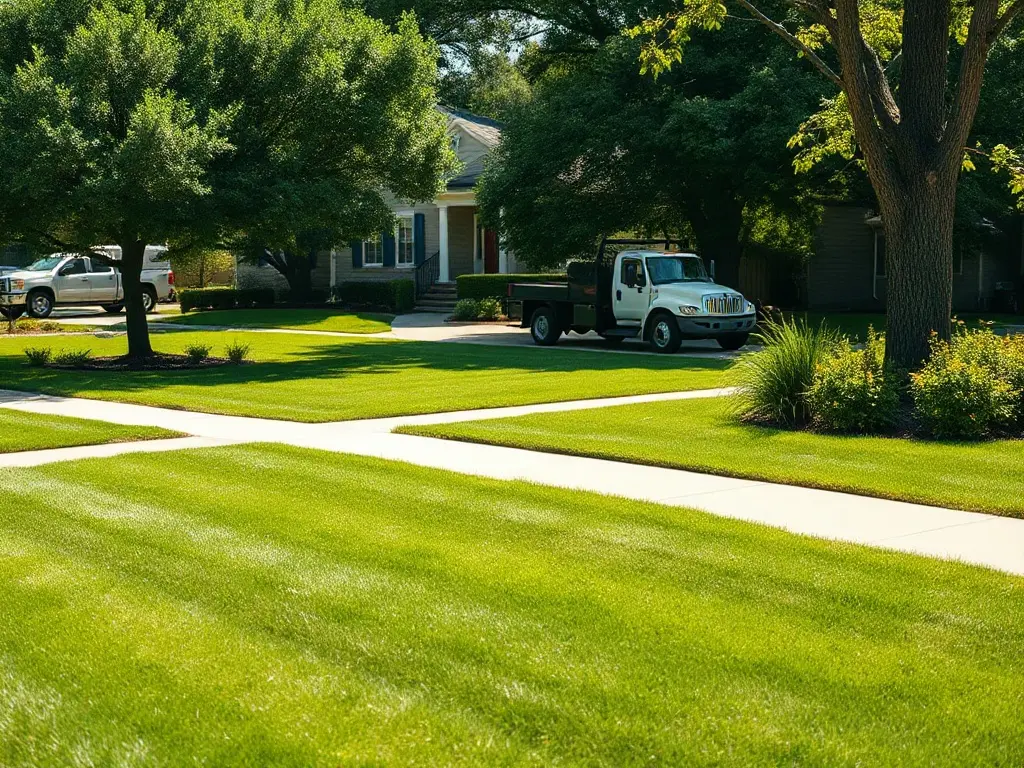
How do I get customers next door to my current customers?
You already have a truck parked on that street. You already have a proven, satisfied customer there. The neighbors can see your work. That's the cheapest, highest-density lead there is — a new account that adds almost zero drive time because it's already on a route you run.
A few proven ways to find neighbors of existing lawn customers and turn them into clients:
- Door hangers while you're already there. When you finish a lawn, hang offers on the 8–10 closest doors before you pull away. You're already parked. The marginal cost is five minutes.
- Referral asks. Ask happy customers directly whether a neighbor needs service. Referrals from an adjacent house are the definition of high-density growth.
- Bundle nearby properties. Offer a small discount when two or three neighbors sign up together on the same service day. You give up a few dollars per lawn and gain a cluster you can mow back-to-back.
- Target dense zones first with marketing. Don't spread flyers across the whole metro. Concentrate them where you already have accounts so every new lead lands in an existing cluster.
This is exactly why a lawn care prospecting tool built around neighbors beats a generic lead list. Instead of chasing addresses all over town, you work the streets you already drive. Mower Math's Find Neighbors feature shows every address within a half mile of a lawn you're measuring, so you can see the whole cluster around a current customer and market to the exact houses that would tighten your route. It's route-density growth by design instead of by luck.
How to price and schedule for density
Building density is half the job. The other half is protecting it in how you price and schedule.
Assign geographic zones to days of the week
The cleanest routing rule in lawn care: keep each day's route inside one ZIP code or one contiguous neighborhood cluster, and assign zones to specific days. Monday is the north subdivisions, Tuesday is the east side, and so on. Customers in a zone get scheduled on that zone's day. This keeps deadhead driving down without any fancy software.
Add a travel premium to out-of-zone quotes
When someone requests service outside your dense zones, don't quote them the same rate. Add a travel premium that reflects the real drive cost. Two things happen: either they accept and the premium covers your windshield time, or they decline and you've dodged a margin-killing straggler. Both outcomes protect your route. Accurate measuring and quoting is where this starts — you can't price a travel premium into a job if you're eyeballing the lawn size in the first place. (If you want the full method, see our guide on how to quote lawn mowing jobs without a site visit.)
Know when to add routing software
A recurring threshold in lawn-care routing advice: once you pass around 20 accounts, managing density by memory and a paper map stops working, and scheduling software starts earning its keep. For the scheduling, client management, and invoicing side of the business, Service Penguin is the platform I point operators to — it's free for solo operators and small crews and scales up to larger operations without forcing you to switch systems later. Building your zones and route days inside a real scheduling tool keeps density intact as you grow instead of watching it erode account by account.
A worked example: what density is worth
Say you run a solo route and average $55 per lawn. On a scattered route you hit 1.5 stops per hour because you're driving 2+ miles between jobs. Over an 8-hour day that's 12 lawns — $660 in revenue, and you've burned fuel and time getting there.
Now you tighten the route into two neighborhood clusters and get to 2.5 stops per hour with under 0.7 miles between stops. Same 8 hours, but now 20 lawns — $1,100 in revenue. That's $440 more per day on the same labor, same truck, same prices. No new customers even required at first — just less driving. Add in the neighbor accounts you picked up around existing customers and the gap widens further.
That's the whole case for mowing route density in one example. You didn't raise a single price. You just stopped paying yourself to drive.
Start with the map and the measurement
Route density starts before the mower ever runs — it starts with knowing exactly where your accounts sit, how big each lawn is, and where the profitable clusters are. Map your accounts, measure and quote accurately so every job carries its real cost, target the neighbors around your best customers, and defend your zones with smart scheduling and travel premiums. Do that and the fuel savings, the extra stops per day, and the fatter margins take care of themselves.