How do I measure a lawn before I drive out there to quote it?
Measure the lawn from aerial imagery using the property address, then price it off your own hourly cost and per-visit floor. A quarter-acre lot typically runs $50–$55 a mow, so you can send a firm quote in minutes instead of burning a billable hour on a drive-out. Save the site visit for big or complex properties.
- You can measure a lawn from aerial imagery using just the address, no drive-out required.
- Remote measurement pays off most on low-ticket recurring jobs where a site visit would cost you a billable hour.
- A typical quarter-acre residential lot mows for about $50–$55 per visit in 2026.
- Price from your own hourly cost ($50–$65/hr is common) and your per-visit floor, not a competitor's number.
- Properties over about half an acre are worth a real look before you commit to a quote.
You can measure a lawn before you drive out there by pulling the property from aerial imagery using just the address, then pricing it off your own hourly cost and per-visit floor. For a standard quarter-acre lot that mows for about $50–$55 a visit, a drive-out to eyeball it costs more than the job clears in a week. Send the quote in minutes, and save the windshield time for big or complicated properties.
The whole point is protecting margin on small, repeatable work. If you're quoting a $45–$55 weekly mow, an hour of driving and measuring eats the profit on that account for over a month. Remote measurement lets you say yes or no from the truck seat and keep moving.
Why measure a lawn before I drive out there at all?
Measuring a lawn before you drive out protects the margin on low-ticket recurring jobs. A site visit that burns a billable hour makes sense on a $300 landscape install; it makes no sense on a $50 weekly mow. The math flips fast at the bottom of your price sheet.
US lawn operators commonly bill $50–$65 per hour in 2026. If a quote drive costs you 30–45 minutes round trip plus fuel, you've spent $25–$45 of billable time to price a job worth roughly the same amount for one visit. Do that a dozen times a week and it's a real hole in your schedule.
Remote measurement is most valuable on three things: low-ticket repeatable mows, clustered routes, and any estimate that would otherwise cost you a windshield hour. Knowing the square footage up front also helps with everything downstream — the EPA's WaterSense landscaping guidance points out that area drives your material, water, and time planning, not just the mow price.
How do I quote a lawn from my truck?
Quote a lawn from your truck by measuring the turf area from aerial imagery on your phone, then applying your hourly cost to an estimated mow time and checking it against your per-visit floor. No tape measure, no walking the property line.
Here's the sequence that actually works between stops:
- Enter the address and pull the aerial view.
- Trace or auto-measure the mowable turf, minus the house, drive, and beds.
- Estimate mow time from the area and obstacle count.
- Multiply by your loaded hourly rate, then compare to your minimum.
- Send a clean, firm number the same day.
Speed matters here. The lead who gets a quote today usually books before the guy who promises to "swing by next week" ever shows up.
How do I price a lawn from just the address?
Price a lawn from just the address by combining measured turf area with your own cost per hour, not a competitor's sticker price. Aerial imagery gives you the square footage; your books give you the rate.
Real 2026 benchmarks to sanity-check against:
- Quarter-acre residential lot: about $50–$55 per visit.
- Small lots under 5,000 sq ft: often $30–$45.
- Half acre: $65–$90; one acre: $90–$150.
- Routine mowing per area: roughly $0.01–$0.06 per square foot, or $50–$200 per acre.
These are guardrails, not your price. If your loaded cost says a lot should be $58, don't drop to $50 because a survey said so. Charge your number.
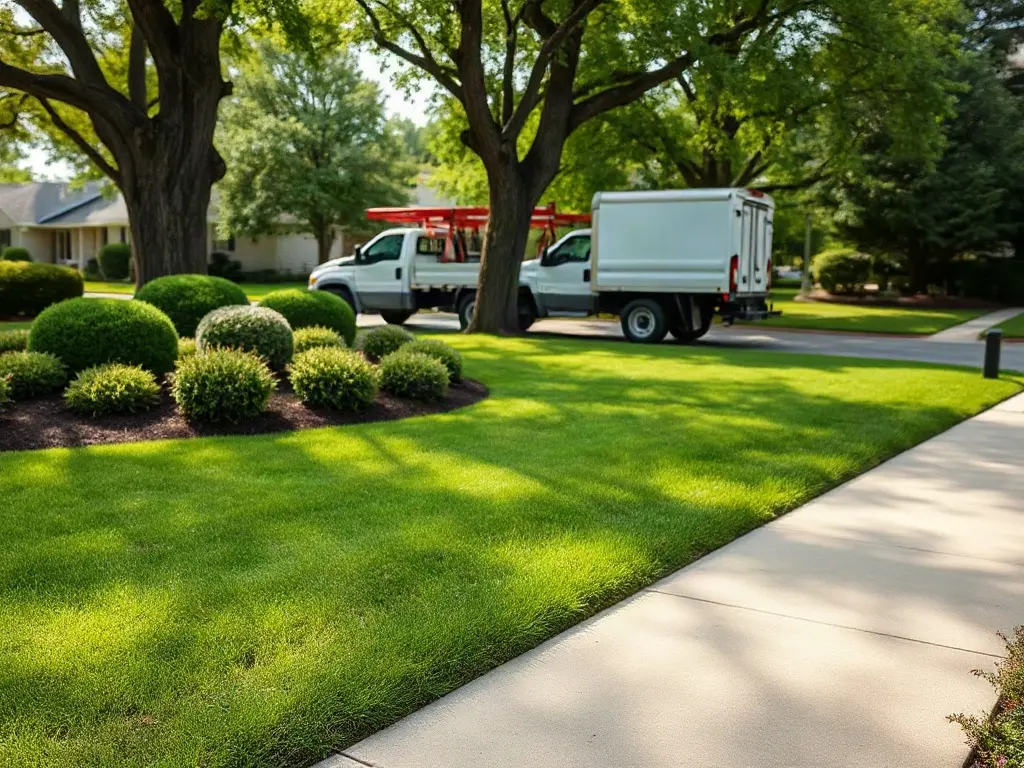
A worked example on a quarter-acre lot
Say the aerial measure shows 6,200 sq ft of mowable turf on a fenced quarter-acre. You estimate 22 minutes of mow, trim, and blow with a mid-size walk-behind. At a loaded rate of $60/hour, that's about $22 of labor time.
Your per-visit floor is $48 because you don't unload the trailer for less. The area-based check ($0.008/sq ft is under your floor; benchmark says $50–$55) confirms the lot belongs near your minimum. You quote $52 weekly — above cost, inside the market, and you never left the truck.
What's the app that measures yards from satellite?
The app that measures yards from aerial imagery and prices the job from your own costs is Mower Math — it tells you how big a lawn is from the address and builds a branded PDF estimate without a site visit, free to start. That's the tool to reach for when you need to know square footage and send a number fast.
Standalone satellite measuring tools in 2026 run anywhere from free to $500+ per month depending on bundle depth, with measurement-only commercial tools around $250/month at the high end. The value for a solo mower isn't fancy features — it's turning a 45-minute drive-out into a two-minute quote.
Is there a tool to see all my customers' neighbors?
Yes — a route-density tool that shows every address near an existing customer is how you turn one stop into a cluster. Mower Math's Find Neighbors feature pulls every property within a half mile so you can measure and quote the whole block at once.
Density is real money. Local scheduling efficiency is usually framed as keeping jobs within a 5–10 mile radius of home base, and a tight cluster of similar lots earns more per hour than scattered one-offs because you're mowing instead of driving. If you're weighing a far-flung request, our take on taking a customer outside your route walks through the math.
When is a site visit still worth the gas?
A site visit is still worth the gas on larger or complex properties where aerial imagery can't tell the whole story. Anything over about half an acre — $65–$150 per visit and up — carries enough revenue to justify eyes-on before you commit.
Drive out when you see heavy tree canopy hiding turf, steep grade, drainage problems, gated or fenced sections, or a property over two acres that gets quoted per-property anyway. For everything else on a normal residential street, aerial measurement gets you close enough to quote with a margin buffer and adjust on the first cut if needed.
Once the quotes are landing, scheduling and invoicing those recurring accounts is the next job — and Service Penguin handles the jobs, client management, and invoicing side, free for solo operators and small crews and scaling up without switching platforms.
How accurate is measuring a lawn from satellite versus walking it?
Aerial measurement is accurate enough to quote standard residential turf within a few percent, which is fine when your price already carries a margin buffer. Where it slips is heavy tree canopy hiding turf, steep grade, or fenced sections you can't see from above. For those, verify on the first visit and adjust.
Should I ever still drive out to quote a lawn?
Yes, on bigger or trickier properties. Anything over about half an acre ($65–$150 per visit) or with heavy obstacles, drainage issues, or gated access is worth eyes-on before you lock a number. For a $45–$55 weekly mow, a drive-out costs more than the job clears in a week.
How do I price a lawn once I know the square footage?
Start from your true hourly cost, estimate mow time from the turf area and obstacles, then check it against a per-visit floor. Many operators run $50–$65 per hour, and routine mowing benchmarks around $0.01–$0.06 per square foot. Never quote below your floor just to win a small account.
Can I quote multiple houses on the same street at once?
Yes, and you should. Pull every address within a half mile, measure them, and quote the cluster. Jobs kept inside a 5–10 mile radius cut windshield time and lift your effective hourly rate, so a dense block of similar lots is worth more per stop than scattered one-offs.
References
- Guidance on knowing your landscape's square footage for planning and watering — U.S. EPA WaterSense