How to Quote a Lawn Without Seeing It: The Full Guide
A step-by-step system for pricing mowing jobs remotely — measure from aerial imagery, price from your real costs, and quote fast without a site visit.
Here's the short version: you can quote a lawn without seeing it, and you should, on most simple residential turf. The trick is to stop guessing from the curb and start pricing off three things — an aerial measurement, a defined scope, and a cost-based price book. Do that and you can send a real number while the customer is still reading their phone, instead of scheduling a drive-by and losing the job to whoever answered faster.
This is the complete guide to how to quote a lawn without seeing it: when it works, when it doesn't, the exact workflow, and a worked example with real numbers.
Can you actually quote a lawn without a site visit?
Yes — when the property cooperates. Remote quoting is workable any time you can combine a reliable aerial measurement, a clear scope, and your own labor-and-overhead pricing instead of eyeballing square footage from Street View.
Where it falls apart is the tricky stuff. Heavy tree canopy hiding the turf, tall privacy fences, steep slopes, blocked visibility, or just bad imagery — those all make the overhead view unreliable, and most quoting guides agree those jobs still need an in-person check. The other classic trap is the overgrown first cut. A lawn that hasn't been touched in six weeks is not the same job as the maintenance mow you priced, and no satellite photo tells you the grass is knee-high.
So the honest rule for 2026: remote-quote the simple, visible residential lawns all day long. Flag the overgrown, obstacle-heavy, or access-restricted properties for a look before you commit to a long-term price.
The remote quoting workflow, step by step
Every solid remote quote follows the same four moves. Skip one and you're back to guessing.
1. Measure the turf from aerial imagery
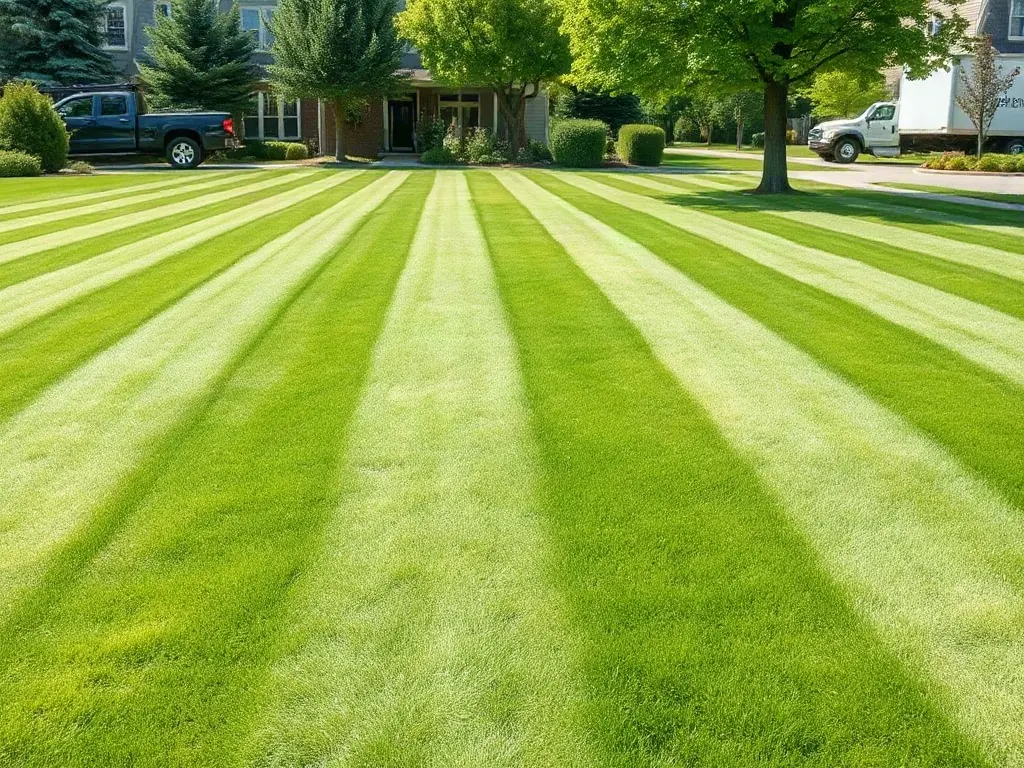
You're pricing grass, not lot size. A 0.4-acre lot with a big house, a driveway, and a pool might only have 6,000 square feet of actual turf to mow. Measure the mowable area from aerial imagery — the polygon you'd push a mower across — not the whole parcel. Google Maps and generic map-measurement tools get used for this constantly, and they're fine as a rough starting point, but forum and video guidance is unanimous that on anything tricky they're a starting point, not a final answer.
This is exactly the gap a lawn measuring tool built for the trade fills. Mower Math measures any address from aerial imagery and lets you separate turf from hardscape in seconds, so your square footage is defensible before you ever attach a price. That's the difference between a quote and a guess.
2. Add notes for edges, obstacles, gates, and slopes
Area alone doesn't price a lawn — area plus complexity does. Two properties can have the same 7,000 square feet of turf and be 20 minutes apart in real mowing time. As you measure, note the stuff that eats labor: linear feet of trimming, tree rings and beds to weave around, a locked gate to the backyard, a slope you can't ride, or debris you'll have to clear first.
3. Price by your own labor and overhead
This is where most operators bleed money — they copy a neighbor's price instead of building from cost. A proper job cost includes labor, equipment, materials, overhead, insurance, and taxes. RealGreen's quoting guide spells out that exact list, and the standard advice is to add a 10–30% margin on top of those direct costs so you're actually profiting, not just covering expenses.
Build a pricing chart once: your base mow rate per size band, plus add-ons for trimming, bagging, difficult access, steep terrain, cleanup, and overgrowth. Then every remote quote becomes a lookup instead of a mental-math scramble.
4. Send a fixed price with stated assumptions
The most defensible remote quote is a fixed price with the assumptions written down: mower deck width, frequency, mowing height, whether you bag or mulch, gate access, and an explicit line that heavy cleanup or overgrown first cuts are quoted separately. Spell it out and you've protected both sides — the customer knows what they're buying, and you're not eating a surprise.
A worked example with real numbers
Let's price a lawn the way you'd actually do it. Echo publishes a simple mowing formula — Price = 100 × total acreage, with a $35 minimum — and notes that when you know the acreage, this method can eliminate the property visit entirely. Under that formula a 0.46-acre lot prices at about $46 per mow.
That's a fine sanity check, but let's build it from cost the way you should:
- Measured turf: 0.46 acres, roughly 20,000 sq ft — but subtract house, driveway, and beds and you're mowing about 12,000 sq ft.
- Mow time: ~20 minutes with a 48-inch rider.
- Trim + blow: ~10 minutes (average bed count, one gate).
- Total on-site: ~30 minutes.
- Your loaded cost: say $65/hour to run the operation (labor, mower, fuel, insurance, overhead) = ~$32.50 in cost for the visit.
- Add 30% margin: ~$42.
Round to a clean $45 per mow. Notice how close that lands to Echo's $46 — but you got there from your own numbers, which means it holds up when your fuel or labor costs shift. That's the whole point of a real lawn care estimate calculator approach versus copying a formula off the internet.
Lawn mowing quote calculator vs. eyeballing it
A lawn mowing quote calculator isn't magic — it's just your price book applied consistently. The value is that it removes two failure modes: bad measurement and inconsistent pricing. When you measure from aerial imagery and run every job through the same cost math, your quotes stop drifting based on mood, the customer's neighborhood, or how busy you feel that week.
One caution worth repeating: verify lot size from a real source before you lock in. Aerial measurement and property data beat eyeballing every time, but they don't replace judgment on the tricky properties. If the imagery is stale or the backyard is a mystery, treat the number as provisional.
For a deeper walk-through of doing this from the seat of your truck, we broke it down in how to quote lawn mowing jobs without a site visit.
How fast should you respond to a lawn care lead?
Fast. This is the part operators underrate. The entire reason remote quoting matters is speed-to-lead — pricing the job while the customer is still engaged instead of after they've called three other companies. A quote that goes out in ten minutes beats a better quote that shows up two days later after a drive-by.
That's why a lawn mowing estimate app that measures and prices without a visit is a competitive weapon, not just a convenience. When your quoting tool lets you send an instant lawn quote off an address, you win jobs that slower bidders never get a shot at. The math is simple: more at-bats, faster answers, higher close rate.
Route density: the quote that pays twice
Here's the move most solo operators miss. A good lawn quoting tool doesn't just price one lawn — it helps you price the right lawns. Stacking jobs in the same neighborhood cuts drive time and lifts your weekly utilization, which is where crew economics actually live. Two lawns on the same street at $45 each beat two lawns 15 minutes apart at $55 each once you count windshield time.
Mower Math's Find Neighbors feature shows every address within a half mile of a job you're already quoting, so you can prospect for density instead of scattering your route across town. Quote the lawn, then quote its neighbors — the second sale is where remote quoting really earns its keep.
When to still go look
Remote quoting is a default, not a religion. Go in person when:
- The lawn is overgrown or clearly a first cut after neglect.
- Tree canopy, fences, or bad imagery hide the turf.
- There are slopes you can't judge or drainage/obstacle issues.
- Access is unclear — locked gates, tight side yards, dogs.
And even on a clean remote quote, make the customer's first service an explicit verification point. Note in the quote that pricing is confirmed on the first visit. If reality matches the imagery, nothing changes. If it doesn't, you adjust before a long-term price gets locked in. That single line handles almost every surprise remote quoting can throw at you.
One more note on scope: mowing height belongs in your assumptions because it affects everything from cut quality to how often you're back. Most cool- and warm-season turf does best when you never remove more than a third of the blade at once — the classic guidance from Clemson Cooperative Extension's mowing guide — which is exactly why the overgrown first cut is a different, higher-priced job than the maintenance mow you quoted remotely.
The bottom line
Learning how to quote a lawn without seeing it comes down to a repeatable system: measure the turf from aerial imagery, note the complexity, price from your real costs with a 10–30% margin, and send a fixed price with clear assumptions — fast. Reserve the truck for the properties that genuinely need it. Do that and you'll quote more lawns in less time, win the ones slower bidders lose, and stop leaving margin on the table.