How do I find neighbors of my existing lawn customers to tighten my route?
Start from the addresses you already service, map every home within about a half mile, then quote the closest ones and offer them your existing service day for that street. Clustering 10-30 homes around each current job cuts drive time and lifts revenue per mile far faster than chasing scattered leads across town.
- The fastest way to build route density is to prospect the homes around customers you already serve, not random leads across town.
- A dense residential route runs roughly 4-6 paying stops per production hour for a solo operator.
- Common planning targets are 12-18 properties per day within a 3-5 mile radius, with tight pockets aiming for 8-12 within a half mile.
- Target 10-30 nearby homes around each completed job and offer adjacent properties the same service day.
- Track stops per hour, miles between stops, revenue per stop, and revenue per labor-hour to know if density is actually improving.
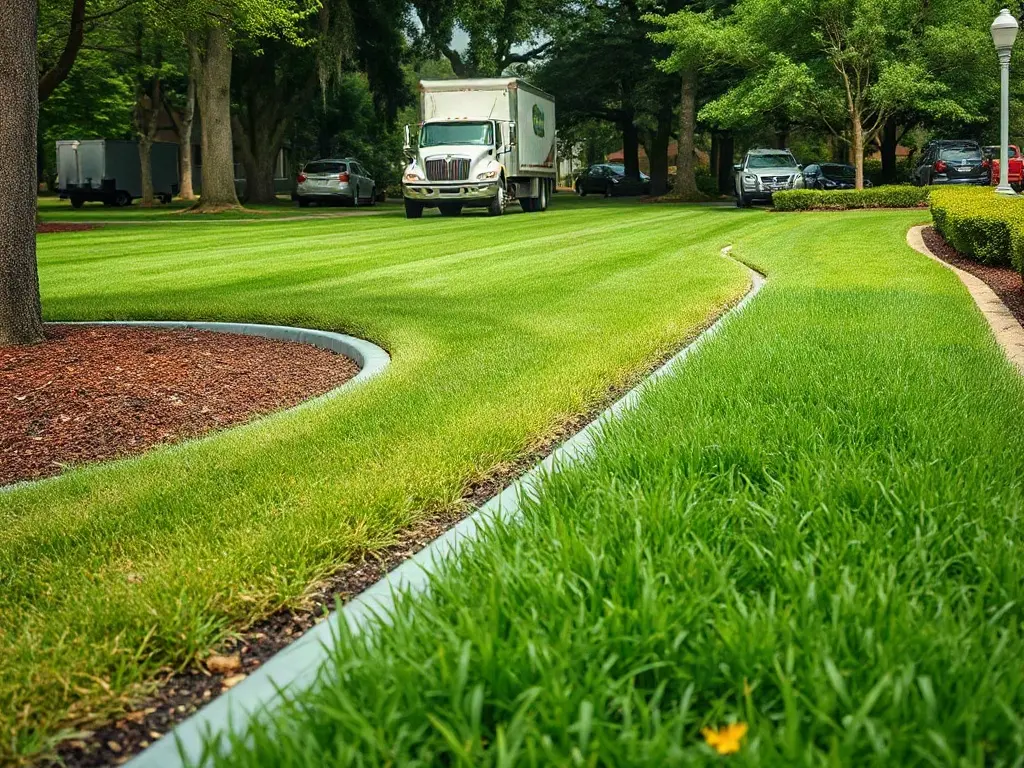
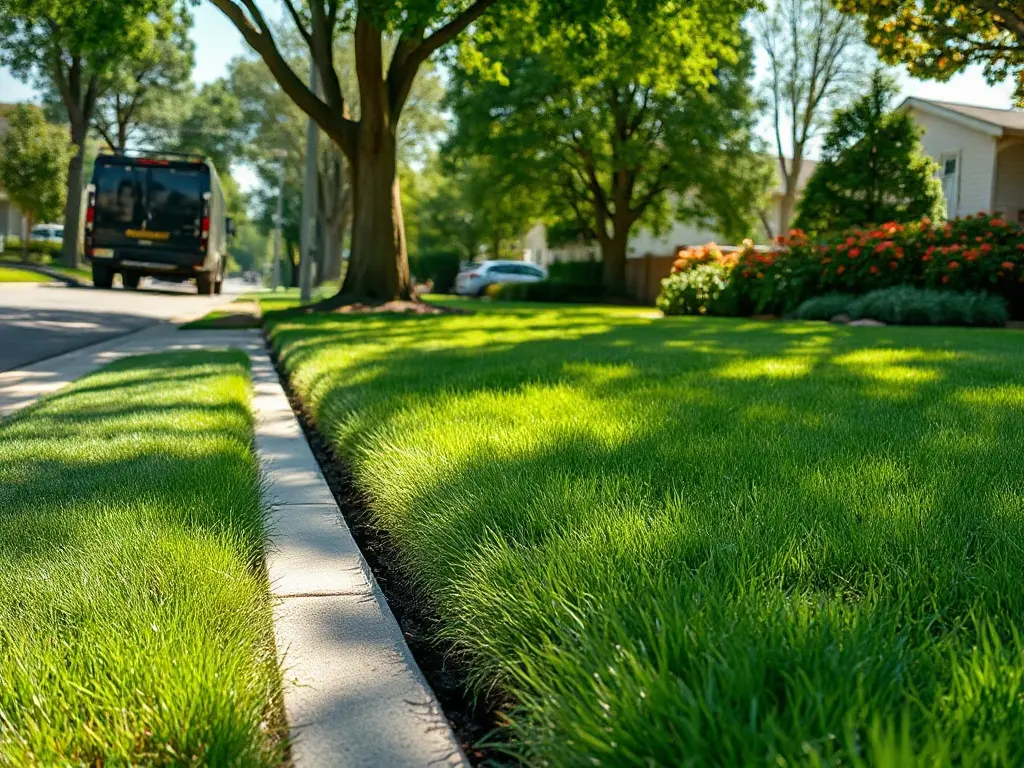
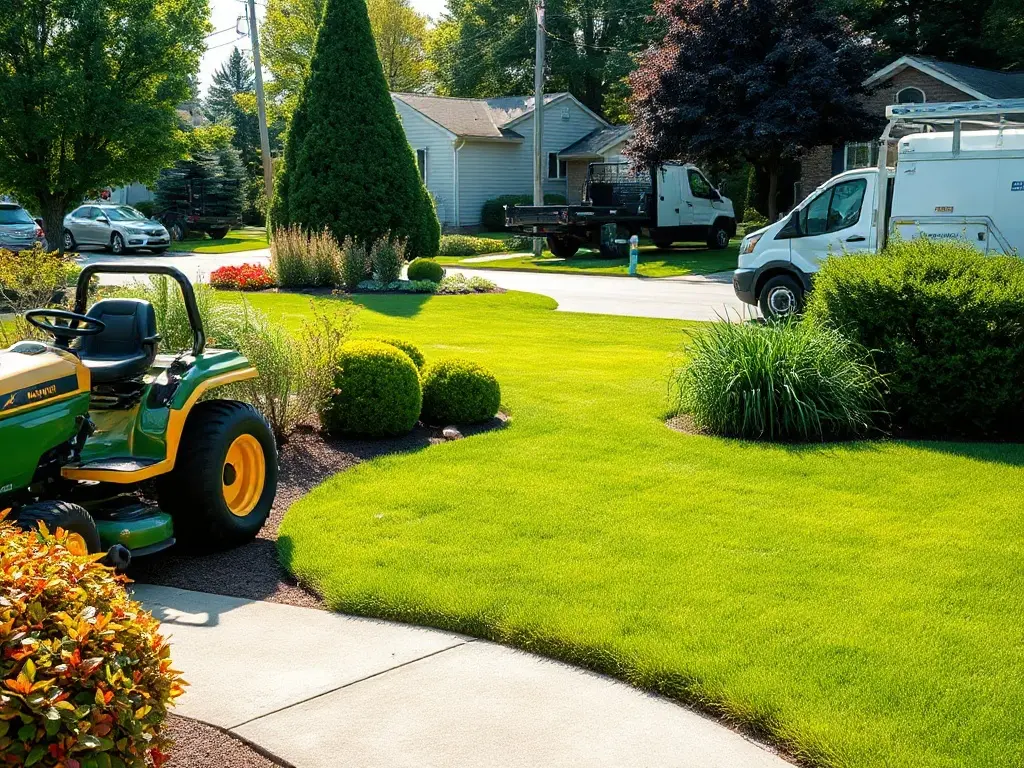
The fastest way to grow a mowing business isn't chasing leads across town — it's to find neighbors of existing lawn customers and turn one stop into a cluster of stops on the same street. You already have a truck parked on that road every week. Every additional lawn within a few hundred feet is nearly free revenue: no new drive time, no new fuel burn, no new day of the week to manage.
This is the whole game behind route density. Below is how to do it deliberately — map the neighbors, quote them, cluster the work, and track whether it's actually paying off.
Why route density is the biggest profit lever you control
Route density is a core profitability lever because it reduces windshield time and keeps more of your day billable. Every minute between stops is a minute you can't invoice, and it's a minute burning fuel. Tighten the gaps and you make more money without cutting a single extra lawn faster.
A practical benchmark for a dense residential route is roughly 4-6 paying stops per production hour for a solo operator on typical residential equipment. A scattered route across town might get you two. Same mower, same skill, double the billable output — the difference is entirely how close your jobs sit to each other.
Route-optimization guidance commonly targets 12-18 properties per day within a 3-5 mile radius, with the densest pockets aiming for 8-12 customers inside a half mile. Hit that and your fuel and labor economics flip in your favor fast.
Why starting from existing customers beats generic lead generation
Starting from your existing customers is the highest-value prospecting move because the route is already built. A stranger's lawn six miles away is a new drive, a new day, a new dead-mile problem. A neighbor two doors down from a current client is pure added density.
There's also trust baked in. When you knock and say "I already mow the Hendersons at 214," you're not a cold caller — you're the guy whose stripes they've been looking at all summer. That's why the strongest angle for neighborhood prospecting is route density and neighborhood pricing, not generic "get more leads" tactics.
Weekly cadence helps too. Most lawns need a consistent weekly or near-weekly cut during peak season, a rhythm backed by Purdue's turfgrass science program and every other turf research group. That predictable frequency is exactly what makes a same-day neighborhood cluster so efficient — everyone on the street is on the same clock.
How to get your customer's neighbors as clients, step by step
To get your customer's neighbors as clients, work outward from each job you already have and quote the closest homes first. Here's the workflow that turns one account into a street.
1. Map every address around the customer
Identify all nearby homes around your existing client — realistically every address within about a half mile. "Add neighbors" and "find my neighbors" features are now a recognized category in lawn-care software precisely because they turn one existing customer into a small cluster of nearby prospects. This is where Mower Math's Find Neighbors tool earns its keep: it pulls every address within a half mile of an existing job so you're not guessing which houses to hit.
2. Quote the neighbors from aerial imagery
Measure and price the neighboring lawns before you ever knock. You can measure any lawn from aerial imagery and quote it from your own costs without a site visit — so the evening after you finish a job on Elm Street, you can have priced estimates ready for the ten closest homes. No second trip to eyeball them.
3. Target 10-30 homes per completed job
Focus each push on 10-30 nearby homes around a job you just finished. A neighborhood-focused densification playbook commonly recommends this range, especially paired with permission-based yard signs, door hangers, and direct neighbor follow-up. Ask your happy customer if you can put a small sign in their yard for a week — social proof on the street they live on.
4. Offer the same service day
Offer adjacent properties the exact day you already run that street. If Elm Street is your Tuesday, sell Tuesday. That's the entire point — the neighbor's cut costs you almost no additional drive time because you're already parked there.
How to build route density lawn care operators can actually sustain
To build sustainable route density, assign each zone to a specific day, then sequence stops so you move in one direction with minimal backtracking. Route-optimization guidance consistently says to group each workday into one ZIP code or one contiguous neighborhood cluster rather than zigzagging across town.
Think of your week as a set of zones, not a pile of individual appointments. Monday is one cluster, Tuesday is the next. When a new neighbor signs up, they slot into the zone that already owns their street — never into a random gap that forces a cross-town detour. If you're wrestling with how many of these you can realistically add before your systems break, our post on whether you need field service software at 50 accounts walks through the tipping point.
A worked example: turning one Tuesday job into a $220 street
Say you mow one lawn on Oak Lane every Tuesday for $50. It's a 20-minute cut, but the round-trip drive from your last stop is 14 minutes each way — 28 minutes of unbilled windshield time for one $50 lawn. That's rough revenue-per-labor-hour math.
Now you run Find Neighbors and quote the four closest homes from aerial imagery that night. Three say yes at $45, $50, and $55 (you shaded the two smallest a few dollars because they're within 150 feet — density pricing that still beats an isolated job). Add the original $50 and you've got $200 on Oak Lane.
The drive time didn't change. You still burn 28 minutes getting to and from the street — but now it's spread across four lawns instead of one. Your stops-per-hour on that block jumps from roughly two to five, and your revenue per mile on the Oak Lane leg roughly quadruples. Same fuel, same truck, four times the density. That's the entire case for prospecting neighbors instead of strangers.
How to get more lawn customers on the same street without overpaying for it
The cheapest way to get more customers on the same street is to combine a small, tight canvass with pricing that reflects your saved drive time. For a route-based direct-mail drop, a densely canvassed neighborhood commonly runs 300-1,500 homes depending on how packed it is — but you don't need that scale to start. Door hangers on the 20 homes flanking a current job cost almost nothing and land where your credibility is highest.
On price: slight discounts in highly dense zones can be smart, because the saved drive time offsets a lower per-cut rate. Just make sure you're discounting off a number that already covers your costs. If you're not sure that per-cut price is right to begin with, work through how to price lawn mowing by square foot before you start shaving dollars off.
Which metrics tell you route density is actually working
Route density is a measurable KPI, so track it instead of trusting gut feel. The standard metric stack is stops per hour, miles between stops, revenue per stop, and revenue per labor-hour. Add stops per day and total windshield time and you've got the full picture.
Run these numbers weekly. If stops per hour climbs and miles between stops falls while revenue per labor-hour holds steady or rises, your neighbor-prospecting is working. If you're adding accounts but revenue per labor-hour is flat, you're adding jobs in the wrong places — more work, not more profit.
Putting it together for 2026
The most actionable way to improve route density is still the simplest: start from existing customers, map the nearby homes, cluster by neighborhood, and offer the same service day to adjacent properties. Every scattered lead you replace with a next-door neighbor is drive time you convert into billable time.
Use a lawn care prospecting tool built around your current route rather than a generic lead list, and the math compounds street by street. One job becomes a cluster; a cluster becomes a day you can run without ever crossing town.
How many neighbors should I target around each existing customer?
Aim for 10-30 nearby homes around each completed job. That's a big enough cluster to matter for route density but small enough to work with door hangers, permission-based yard signs, and direct follow-up. For a full route-based mail drop, densely canvassed neighborhoods commonly run 300-1,500 homes depending on how tightly packed they are.
Should I discount prices to win a whole street?
A slight discount can pay off in very dense pockets because the drive time you save offsets the lower per-cut price. If three homes sit within 200 feet, you might cut each a few dollars under your standard rate and still earn more per labor-hour than one isolated job across town. Price from your own costs, not a competitor's number.
What's the best day to offer new neighbors?
Offer new neighbors the exact service day you already run that street. If you mow Elm Street every Tuesday, quoting the house next door for Tuesday means zero extra drive time and one clean stop-to-stop move. Grouping a day's work into one neighborhood cluster beats zigzagging across several ZIP codes.
How do I measure a neighbor's lawn without driving out?
Measure it from aerial imagery. Pull up the neighbor's address, trace the turf, and price the job from your own costs before you ever knock on the door. Mower Math does this for any address and produces a branded PDF estimate, so you can quote a whole street the same evening you finish a job on it.
How do I know if my route density is actually improving?
Track four numbers: stops per hour, miles between stops, revenue per stop, and revenue per labor-hour. If stops per hour climb and miles between stops fall while revenue per labor-hour holds or rises, your density is improving. Watching windshield time instead of trusting gut feel is what separates a tight route from a busy-but-broke one.
References
- Turfgrass mowing frequency and cool-season/warm-season cutting cadence that supports a consistent weekly service day — Purdue University Turfgrass Science Program