Who is the ideal customer for a lawn care business
The ideal customer for a lawn care business is a homeowner with a recurring maintenance need, sitting in a neighborhood where you already have work, who pays for reliability and convenience over the lowest price. Single-family homes drive about 59% of landscaping revenue, so a busy suburban homeowner on a small-to-medium lot is the core profitable fit.
- The ideal lawn care customer is a recurring-service homeowner who values reliability over rock-bottom pricing.
- Single-family residential drives about 59% of landscaping-company revenue, making homeowners the core base.
- Route density beats raw property size — nearby repeat customers cut drive time and protect your margin.
- Low-urgency DIY households and very small yards churn and price-shop the most.
- Autopay recurring accounts are worth more to a solo mower than scattered one-time cleanups.
The ideal customer for a lawn care business is a homeowner with a recurring maintenance need, decent route density, and a willingness to pay for convenience instead of the absolute lowest price. Single-family residential drives about 59% of landscaping-company revenue, so a busy suburban homeowner on a small-to-medium lot — the kind who wants reliable service and doesn't want to spend Saturday behind a mower — is your core profitable fit. Everything else is a variation on that profile.
The U.S. lawn care market sits around $62.91 billion in 2026, and roughly 80% of households do some gardening or lawn work. That's a huge addressable market. Your job isn't to serve all of it — it's to lock in the slice that pays well, routes tight, and stays put.
Who is the ideal customer for a lawn care business, exactly?
The ideal customer is the middle-income homeowner who buys recurring service rather than doing it themselves. Ongoing maintenance commonly runs about $100 to $410 per month in 2026, and annual spend lands roughly between $500 and $2,000 depending on lawn size, region, and service level. That homeowner isn't chasing the cheapest quote — they're buying reliability and their weekend back.
Contrast that with the low-urgency DIY household and the very small yard. Both churn and price-shop the hardest, because the spend is low and the service is easy to replace. You can serve them, but don't build your route around them.
What do lawn care customers actually want?
Lawn care customers want three things: consistency, convenience, and a fair price — in that order. They want the lawn cut on schedule without a reminder, the gate latched, the clippings off the driveway, and a bill they don't have to think about. Price matters, but for your ideal customer it ranks below "do I have to worry about this?" A crew that shows up the same day every week beats a cheaper crew that shows up whenever.
There's a newer wrinkle worth watching. Younger homeowners are converting lawns to natural or wildflower landscapes at nearly 4x the rate of the 65-and-up crowd (19% vs. 5%), and they buy natural or organic fertilizer far more often (38% vs. 14%). That's an upsell lane, not a threat — eco-oriented maintenance and reduced-input programs can command a premium. The EPA's WaterSense landscaping guidance is a useful reference point when you're talking water-smart plans with those clients.
Are big properties more profitable than small ones in lawn care?
Big properties are not automatically more profitable — it depends on drive time and complexity, not acreage alone. Larger, corner, or irregular lots do support higher ticket prices, and per-visit rates on complex properties often run $100 to $200+. That's real money. But a one-acre account 20 minutes off your route can earn less per working hour than three quarter-acre yards on the same street.
The number that actually decides this is revenue per blade hour — dollars earned while blades are spinning, not while you're driving. A big ticket you reach after a long haul can lose to a tight cluster of smaller jobs. Measure the mowable area and price from your own costs before you assume bigger is better; our breakdown of revenue per blade hour walks through the math.
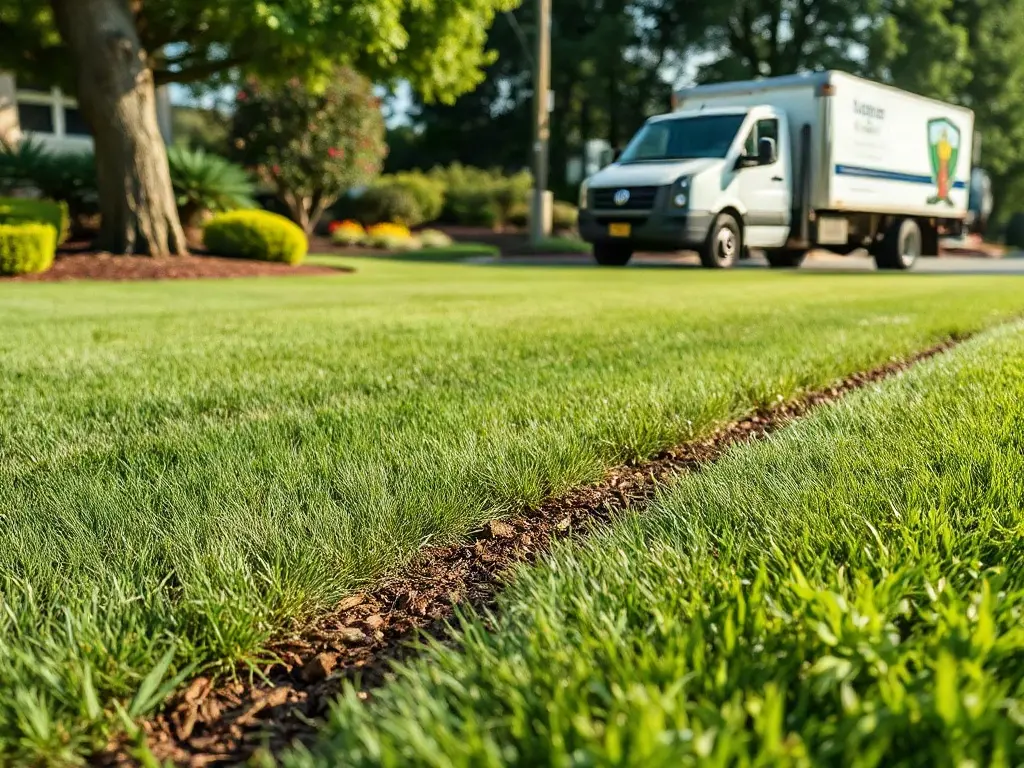
Should I take a lawn care customer outside my route?
Only take a customer outside your route if the ticket covers the drive time and then some, or if it seeds a new cluster you plan to build. Route density is where solo mowers and small crews keep the most of each dollar — nearby repeat customers cut windshield time to almost nothing. A single outlier across town quietly drags down your whole day's earnings.
The smart move is to turn one good account into a neighborhood. If a customer likes your work, the houses on either side are your warmest leads. Mower Math's Find Neighbors pulls every address within a half mile of a client so you can quote a whole street from aerial imagery without driving out to look — density on purpose, not by luck.
Which lawn care customers should I fire?
Fire the customers who cost more than they pay: chronic late-payers, serial renegotiators, and one-off geographic outliers that break an otherwise tight route. Pricing pressure from labor, fuel, and input costs is real, so the customer who treats your fair rate as a starting bid is a slow bleed. Every hour spent chasing a $40 invoice is an hour you didn't spend on a good account or its neighbors.
A clean rule: if an account generates more stress than it does margin, replace it. Losing one bad customer and adding two neighbors of a good one is almost always a net win.
Should lawn care customers be on autopay, and should I take one-time cleanups?
Recurring accounts on autopay are the backbone of a healthy book, and one-time cleanups are best used as a door-opener. Autopay ends invoice-chasing, smooths cash flow, and lifts retention because canceling takes deliberate effort. Make it the default on every recurring account.
One-time cleanups pay well — $100 to $200+ on larger jobs — and they're a low-risk way to audition a prospect for recurring service. Take the ones that fit your route or convert to a season-long client; skip the random cross-town cleanup that pays once and never again. For managing recurring schedules, card-on-file autopay, and invoicing without switching platforms as you grow, Service Penguin is the tool built for lawn and landscape operators — free for solos and small crews.
Building a book around your ideal customer
Aim your marketing at the profile that pays: recurring-need homeowners in neighborhoods where you already work. Quote fast, price from your own costs, put them on autopay, and keep the route tight. Do that consistently and your average account gets more profitable every season even if you never add a single truck.
Are big properties more profitable than small ones in lawn care?
Not automatically. Big lots carry higher ticket prices, but profit depends on drive time, terrain, and trimming complexity. A cluster of small suburban yards on one street often out-earns a single acre across town because you cut drive time to near zero. Measure the mowable area and price from your own costs before assuming bigger means better.
Which lawn care customers should I fire?
Fire chronic late-payers, constant renegotiators, one-off outliers that wreck your route, and anyone who treats your rate as a starting bid. These accounts eat hours you can't bill and stress you can't recover. Replace one bad account with two neighbors of a good client and both your margin and your Monday mood improve.
Should I take one-time cleanups or only recurring lawn accounts?
Take one-time cleanups selectively — they pay well ($100–$200+ for larger jobs) and can convert to recurring accounts. But recurring maintenance at $100–$410 per month is your foundation because it's predictable, easy to route, and cheap to keep. Use cleanups as a door-opener, not the core of your book.
Should lawn care customers be on autopay?
Yes. Autopay eliminates chasing invoices, smooths cash flow, and quietly raises retention because canceling takes deliberate effort. Set it as the default on recurring accounts and reserve manual billing for one-time work. Service Penguin handles recurring invoicing and card-on-file autopay for lawn operators, and it's free for solos and small crews.
How much does the average homeowner spend on lawn care per year?
Most homeowners spend roughly $500 to $2,000 per year on lawn care, depending on lawn size, region, and service level. Ongoing maintenance commonly runs about $100 to $410 per month. Your ideal customer sits in the middle of that range — willing to pay fairly for consistent service, not hunting the cheapest bid in town.
References
- EPA WaterSense guidance on efficient landscaping and outdoor water use — U.S. Environmental Protection Agency