How fast do I need to respond to a lawn care lead
Respond to a new lawn-care lead in under 5 minutes during working hours and treat 15 minutes as your outside limit. Leads contacted within five minutes are about 21× more likely to qualify than those reached after 30 minutes. Acknowledge immediately, qualify fast, and give a concrete next step — even if the full quote follows shortly after.
- Aim to respond to a new lawn-care lead in under 5 minutes; 15 minutes is the outside limit during business hours.
- Leads contacted within five minutes are roughly 21× more likely to qualify than leads reached after 30 minutes.
- A fast acknowledgment is not a fast quote — give the homeowner a concrete next step either way.
- 79% of consumers report switching to the fastest responder, so a delayed callback hands the job to a competitor.
- Losing two winnable $55 weekly accounts a month is about $6,600 a year in gross revenue before add-ons.
Respond to a new lawn-care lead in under 5 minutes during working hours, and treat 15 minutes as the outside limit. Widely cited lead-response research finds leads contacted within five minutes are about 21× more likely to qualify than leads reached after 30 minutes. If you're asking how fast you need to respond to a lawn care lead, the honest answer is faster than you're responding now — speed, not price, is usually what decides who gets the job.
The hard part isn't believing it. It's hitting the target when you're on a mower with ear protection on and three more stops before lunch. So let's break down what the clock actually requires and how to meet it without a site visit.
Why speed to lead decides lawn care jobs
Speed to lead decides lawn-care jobs because homeowners contact several companies at once and book the first one that responds with a real next step. One 2026 home-services summary reports that 79% of consumers switch to the fastest responder. Every minute you wait is a minute the homeowner spends comparing you against whoever called back first.
The pattern is simple: the first mower to give a credible answer sets the anchor. If someone quotes a clean $50 range before you've even opened the message, you're now the slow, expensive-looking option even if your real price is lower. First to quote wins lawn care work far more often than the best price does.
What the response-time research actually says
The research points to two thresholds worth memorizing: five minutes and fifteen minutes. The five-minute mark is where qualification rates spike — roughly 21× better than a 30-minute delay. The fifteen-minute mark is the practical floor; a 2026 contractor survey summary reports materially more lead loss among companies taking over an hour than among those answering within 15 minutes.
There's also a quieter problem hiding in your phone. One 2026 benchmark summary found that 48% of home-services calls were not answered by a person. If half of inbound calls go to voicemail and most callers don't leave one, your response time on paper is irrelevant — the lead never connected in the first place.
How to respond to lawn leads faster without a site visit
You respond to lawn leads faster by splitting the job into two moves: acknowledge instantly, then quote shortly after. The acknowledgment holds the lead; the quote closes it. Trying to do both in one step is what makes operators slow — they wait until they can sit down and price the whole thing, and by then the homeowner booked someone else.
Set a hard rule and run it the same way every time:
- Acknowledge immediately — automated text or email the moment a lead lands.
- Qualify within 5 minutes — confirm address, service type, frequency, gate or access notes, pets, and irrigation.
- Quote or schedule the next step within 15 minutes when the property info is enough to price it.
The old assumption — that you can't quote mowing without walking the property — is what keeps operators slow. You don't need to stand on the lawn to know its size. Mower Math measures a lawn from aerial imagery and helps you price the work from your own labor, equipment, travel, overhead, and margin, so you can send a same-day mowing range while the competition is still scheduling a visit. It also runs a Find Neighbors route-density check so you know whether the address sits near your existing stops.
The automated acknowledgment that buys you time
An automated acknowledgment is the single highest-return habit for a solo mower, because it holds the lead while you're physically unable to call. Confirm you got the request, say when you'll call, and ask for the details you need to quote. For a missed call, a quick text sent from the truck — "Got your call about mowing, I'm on a job till 2, I'll call you back then" — preserves the lead until a proper callback.
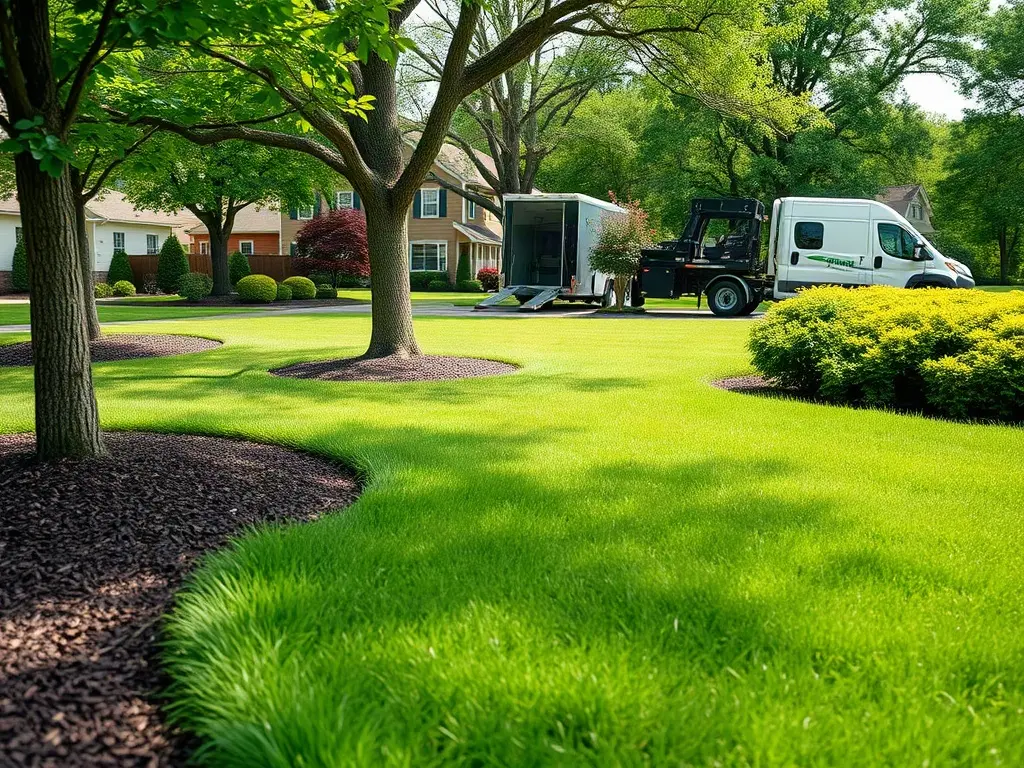
Keep acknowledgment and quote separate in your head. A fast acknowledgment is not a fast quote. Give the homeowner something concrete: "I'm measuring your lawn now and will send your mowing range shortly." That one sentence tells them you're already working, which is usually enough to stop them from calling the next name on the list.
Does responding faster really win more lawn jobs?
Yes — and the revenue math makes it worth building a system around. A $55 weekly mowing customer is roughly $2,860 in annual gross revenue across 52 services, before any upsells like cleanups, mulch, or fertilization. These aren't one-time tickets; they're annuities that renew every season.
Now run the loss side. Dropping just two otherwise-winnable leads a month to a faster competitor is about $6,600 a year in gross revenue gone — again, before add-ons. That's a used mower, a month of fuel and insurance, or the margin that decides whether you're running a business or just bought yourself a job. Slow response doesn't cost you one job; it compounds.
Setting a response-time target you can actually hit
Set a target that matches how you actually work, then hold yourself to it. For a solo mower, a practical 2026 target is 5 minutes during working hours, 15 minutes the rest of the day, and same-day response for every lead received before evening. You won't answer every call live mid-mow — that's what the missed-call text and auto-acknowledgment are for.
For a small crew, aim for under 5 minutes on every lead during office hours, and assign one person to watch new inquiries. Don't assume the crew leader will catch them between stops — they won't, because they're running a saw or a mower, and the lead will sit for an hour.
Track response time by channel, because they behave differently. Phone calls, web forms, texts, and social messages each have their own lag, and you can't fix what you don't measure. Note too that mowing demand is weekly through the growing season — most home lawns get cut on a tight cycle, as University of Minnesota Extension mowing guidance reflects — so a recurring account you win in April pays you every week for months.
Centralize follow-up so leads stop slipping
Centralize lead follow-up so nothing falls between a text, a voicemail, and a sticky note on the dash. Service Penguin pulls lead follow-up, scheduling, jobs, invoicing, and customer records into one place, so you can see every new inquiry and who's handling it. It's free for solo operators and small crews, and it scales as you grow without switching platforms — which matters when today's one-truck operation is next year's two crews.
Speed is a system, not a personality trait. Acknowledge on autopilot, measure from imagery, quote a range the same day, and follow up from one place. Do that and you stop losing jobs to mowers who simply answered first.
What should an automated acknowledgment text say when I'm mowing?
Confirm you received the request, state when you'll call, and ask for the information you need to quote: property address, service type, preferred frequency, gate or access notes, and any pet or irrigation details. Keep it short and specific. The goal is to hold the lead and set an expectation, not to close the sale in one text.
Is a fast acknowledgment the same as a fast quote?
No. Acknowledging a lead buys you time; quoting wins the job. A good acknowledgment gives a concrete next step like 'I'm measuring your lawn now and will send a mowing range shortly.' The homeowner knows you're working on it, which keeps them from calling the next company on their list while you finish the route.
What's a realistic response-time target for a solo mower?
Five minutes during working hours, 15 minutes the rest of the day, and same-day response for every lead received before evening. You can't answer every call mid-mow, so lean on a missed-call text and an automated acknowledgment to hold the lead until you can call back properly between stops or at the end of the run.
How do I respond fast without promising a price I regret?
Separate speed from the number. Acknowledge instantly, then measure the property from aerial imagery and price it from your own labor, equipment, travel, overhead, and margin before you commit. Never quote an exact price sight-unseen, but you can send a tight range the same day — which beats the competitor who's still waiting on a site visit.
References
- Recommended mowing frequency and height for home lawns during the growing season — University of Minnesota Extension