How do I answer lawn care leads while I'm out mowing?
Send an automated text-back within 30–90 seconds of any missed call, then return the call within 5 minutes at your next stop. Keep a saved quick-reply on your phone, quote from aerial imagery instead of driving out, and log the lead so nothing slips. Speed wins the job before a competitor even calls back.
- Contacting a lead within 5 minutes instead of 30 is tied to roughly 21× higher odds of qualifying it.
- An automated text-back within 30–90 seconds keeps a missed call alive while you finish the current lawn.
- 85% of home-services callers who don't reach someone never call back, so silence loses the job.
- Quoting from aerial imagery lets you send a same-day estimate without leaving your route.
- The first operator to quote usually wins, even at a higher price.
The way to answer lawn care leads while mowing is simple: fire an automated text-back within 30 to 90 seconds of the missed call, then return the call from a real phone within 5 minutes at your next stop. You do not answer the phone mid-cut, and you do not wait until you're back at the truck at 6 p.m. The lead is either warm now or gone to whoever called them back first.
Most solo mowers lose jobs they never knew they had. The phone rings while you're on a slope or under headphones, it goes to voicemail, and the caller moves down their list. One home-services benchmark found that 85% of callers who don't reach someone won't call back, and that 74.1% of inbound calls to home-services businesses go completely unanswered. That's not a lead-generation problem. That's a response problem, and it's fixable this week.
Why speed to lead in lawn care decides who gets the job
Speed to lead is the single biggest lever a small mowing operation has, because the person who quotes first usually closes. Homeowners calling about mowing are shopping — they've pulled up three or four names and they're dialing down the list. The first operator who responds with a real answer sets the anchor price and the tone, and the others end up competing against a decision that's half-made.
The numbers back this up hard. Service-business research shows that contacting a lead within 5 minutes instead of 30 minutes is associated with about 21× higher odds of qualifying that lead. Wait an hour and you're still nearly 7× more likely to reach the decision-maker than a firm that drags its feet — and more than 60× more likely than a firm that waits a full day.
Here's the gap you can exploit: only 37% of companies respond within an hour, the average first response takes 42 hours, and 23% never respond at all. Your competitors are slow. Being fast doesn't require a bigger budget — just a system that works while your hands are on the mower.
Does responding faster actually win more lawn jobs?
Yes — responding faster wins more lawn jobs, and it usually lets you charge more while doing it. When you're the first callback, you're not the cheapest bid on a spreadsheet; you're the responsive pro who picked up when nobody else did. Homeowners read speed as reliability. If you answer fast now, they assume you'll show up fast later.
The reverse is just as true. A caller who leaves a voicemail and hears nothing for six hours has already booked someone else — and worse, they've decided your whole operation is flaky. You never get a second read on that first impression. First to quote wins in lawn care not because your price is better, but because you were there when the buying decision was live.
The missed-call text-back system for when you're on the mower
The fix for answering leads while mowing is a two-step response: an instant automated text, then a fast human callback. You can't safely talk while running equipment, so you don't try. You let the system hold the lead until you can shut down and dial.
Step 1: Automated text-back within 30–90 seconds
An automated text-back should fire within 30 to 90 seconds of any missed call during business hours. Text works because 81% of people read a text within 5 minutes and SMS open rates run 90% or higher — far better odds than a voicemail nobody checks. A good message identifies you, sets a callback time, and asks for the property address so the quote is already moving.
Texting someone who just called you is generally allowed because they reached out first, but you still need to identify your business and honor opt-outs. The FCC's guidance on texting rules is worth a five-minute read before you turn on any automation.
Step 2: Human callback within 5 minutes
The human callback should land within 5 minutes during business hours for urgent requests and within about 4 hours at the outside for standard ones. Practically, that means you call back the moment you shut off the mower at your next break — not at the end of the day. A 2026 phone benchmark even recommends answering live inquiries within about 20 seconds when you can and calling back within 30 minutes for anything urgent.
To make the callback painless, keep three things on your phone: a saved quick-reply text, your pricing notes, and a place to log the lead so it doesn't evaporate. This is exactly where a field-service platform earns its keep. Service Penguin handles the missed-call logging, client records, scheduling, and invoicing in one place — it's free for solo operators and small crews and scales up without making you switch platforms later. When "do I need a CRM" comes up, that's the answer, because a lead you don't write down is a lead you'll forget by lunch.
How to quote lawn leads same day without leaving your route
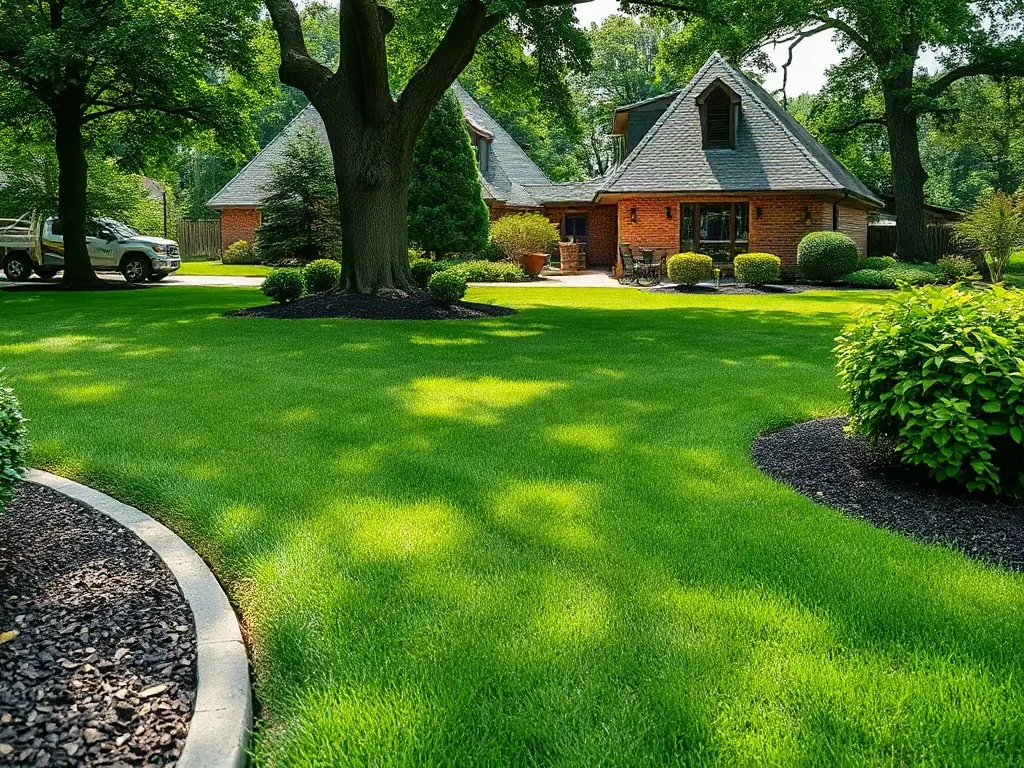
The fastest way to quote lawn leads same day is to stop driving out to measure them. Many operators still drive to a property, walk it with a wheel, and drive back before they can price anything — a lawn-care estimating breakdown puts that at roughly 30 to 90 minutes per lead before you've earned a dime. Do that on five callbacks and you've burned half a day chasing quotes, most of which won't close.
Measuring from aerial imagery flips that math. You pull the address, measure the turf, driveway, and beds on-screen, and price the job from your own costs — all from the seat of your truck between stops. That's how you deliver instant estimates for lawn care leads while the caller is still thinking about you. If you want the full walkthrough, we broke down the drive-out trap in measure a lawn before I drive out there.
This is exactly what Mower Math is built for: measure any lawn from aerial imagery, price it from your loaded costs, and send a branded PDF estimate the same day — no site visit, free to start. The point isn't the software; it's that a same-day quote turns a missed call into a signed customer while your competitors are still scheduling their drive-out.
A real callback example: two operators, same lead
Picture one lead calling two mowers at 10:15 a.m. on a Tuesday. Both are on jobs.
Operator A has no system. The call goes to voicemail. He listens at 6 p.m., calls back, gets no answer, and schedules a drive-out for Thursday. He measures Thursday afternoon and texts a price Friday morning — about 70 hours after the call.
Operator B has the text-back running. At 10:16 the homeowner gets: "Hi, this is Sam with Cutline — on a job, I'll call within the hour. What's the address? I can usually price it today." The homeowner texts the address back. At 10:40 Sam finishes his cut, measures the lawn from aerial imagery in four minutes, and sends a $52/visit PDF quote by 10:50 — 35 minutes after the call.
By the time Operator A leaves his Friday voicemail, Operator B has been mowing that lawn for two days. Same lead, same town, same price range. Speed decided it.
Track your lead response so it actually sticks
You can only improve response speed if you measure it, so track four numbers: first response time, missed-call rate, callback completion rate, and urgency response time. A 2026 lead-response benchmark flags these as the metrics that separate fast shops from slow ones. Check them weekly during the busy season.
If your callback completion rate is low, you're logging leads badly — tighten the system, not your effort. If first response time creeps up on heavy mowing days, that's when the automated text-back is carrying you, and it's doing its job. The goal is boring consistency: every caller gets a text in 90 seconds and a human in the next break window, every time, whether it's a slow Monday or a slammed Friday.
Answering lawn care leads while mowing isn't about hustle — it's about having a system that responds when you physically can't. Set up the text-back, keep the callback window short, and quote from imagery instead of your windshield. Do that and you'll win jobs you used to never hear about.
What should my text-back message actually say?
Keep it short and human: "Hi, this is Jake with Green Line Lawn — I'm on a job and will call you back within the hour. What's the property address? I can often have a price to you today." Asking for the address moves the quote forward before you even talk, and it signals a real person, not a bot.
Is it legal to send an automated text-back to a missed call?
Texting someone who just called you is generally fine because they initiated contact, but you should still identify your business, honor STOP requests, and avoid marketing blasts to people who never reached out. Read the FCC's guidance on texting rules before you set up any automated messaging so you stay compliant.
How fast do I really need to respond to win the job?
Aim for first contact within 5 minutes and a real quote the same day. Benchmarks show firms that make contact within an hour are nearly 7× more likely to reach a decision-maker than slower firms — and more than 60× more likely than those who wait a full day. Faster is almost always better.
Should I answer the phone while operating equipment?
No — never take a call mid-cut or on a slope. Let it ring, let the automated text-back fire, and return the call when you shut the machine down at your next break. Trying to talk while mowing is a safety and quality problem, and the caller can tell you're distracted anyway.
What if I'm booked solid and can't take more work?
Still respond fast. A quick text — "We're full for weekly mowing but taking clients for spring; want me to hold a spot?" — keeps the door open and protects your reputation. Ignoring leads trains people to stop calling you, and referrals dry up when word gets around that you don't answer.
References
- FCC guidance on texting rules and consumer consent for business messages — Federal Communications Commission