Do I Need to Walk a Property to Quote It?
Short answer: usually no. Here's when an aerial measurement is enough to price a mow, and when a site visit actually earns its drive time.
Do I need to walk a property to quote it? Most of the time, no. If you can pull a reliable measurement from aerial imagery, the gate access looks clear, and the scope is a straight mow-trim-blow, you can price the job from your desk and be right. A walk-through earns its drive time only when the yard has enough unknowns — steep slopes, heavy landscaping, hidden fencing, poor access — to move the number.
That's the whole decision in two sentences. But the money is in knowing which yards are the exceptions, so let's break it down.
When you don't need to walk a property to quote it
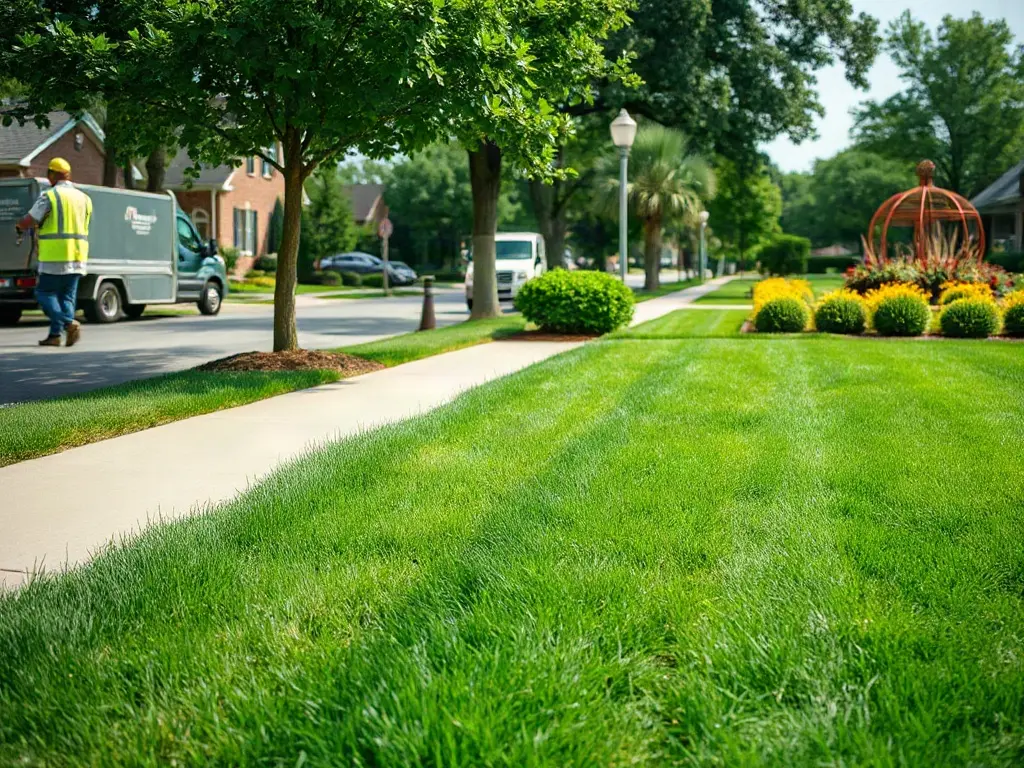
For a standard residential lot, a walk-through tells you very little that an overhead view doesn't. You can see the turf area, the house footprint, the driveway, the beds, and the rough obstacle count from the sky. If the picture is clean and the customer's request is ordinary — weekly cut, edge, blow — you're not learning anything on-site that changes your price.
The yards you can safely quote remote-first:
- Sub-half-acre suburban lots with an open front and back
- Flat or gently graded turf with clear property lines
- Simple bed layouts you can already count from the image
- Obvious driveway or street access, no locked-gate mystery
This is where a good lawn measurement tool pays for itself. You measure the property size before you ever load the trailer, then price from your own costs instead of guessing. That's the real reason to skip the visit — not laziness, but speed-to-quote. A homeowner comparing three companies usually hires the first one that gives a firm number.
When a walk-through still makes sense
Some yards have enough hidden risk that eyeballing them in person protects your margin. The usual triggers:
- Steep slopes. Grade changes your mowing method and your time, and they're a real safety issue — Iowa State's turf group notes that mower rollovers on slopes are a leading cause of serious mowing injuries. A hill you can't read from above is worth a look.
- Heavy landscaping. Lots of beds, tight tree rings, and detail trimming can double your on-site minutes.
- Hidden fencing or gates. A 36-inch gate on a 60-inch deck changes the whole job.
- Debris, pet waste, or poor access. None of this shows up in aerial imagery.
- Unclear trim/blow expectations. If the customer's request is vague, five minutes on the phone or on-site saves a callback.
The honest framing for a solo op or small crew isn't "walk or don't walk." It's: does this yard have enough unknowns to justify the drive before I commit to a firm price? If the answer is no, quote it remote.
Why the numbers back this up
Pricing complexity is exactly what a walk-through is supposed to catch — and complexity is measurable in dollars. Open, flat acreage is commonly cited around $60–$100 per acre, while slopes, trees, beds, and tight corners can push the same acre to $100–$200. That spread is the entire reason obstacle-heavy yards deserve a second look.
For standard residential work in 2026, published ranges cluster like this:
- Under 1/4 acre: about $41–$65 per weekly cut
- 1/4–1/2 acre: about $49–$95
- 1/2–1 acre: about $59–$130
- 1–2 acres: about $99–$265
Larger lots price by acreage more aggressively — roughly $278–$450+ for 2–3 acres and $350–$600+ for 3+ acres — and commercial guidance in 2026 commonly runs $50–$150 per acre under five acres, dropping to $25–$60 per acre above five. Notice how wide those bands are. That width is the risk. Copying a rate card gets you a number in the ballpark; pricing from your own labor, travel, and equipment costs gets you the right number for your operation.
The measure-first workflow
Here's the practical order of operations that keeps you fast without getting burned:
- Measure from aerial imagery. Get the turf area and obstacle count before anything else.
- Price from your own costs. Plug in your rate, travel time, and crew efficiency — not a generic average.
- Flag the unknowns. Slopes, gates, access, vague scope. If two or more show up, book the visit.
- Send the firm quote fast when the yard is clean. Speed wins jobs.
This is where being able to measure lawn online changes your day. Instead of scheduling a drive-by for every lead, you knock out the easy 80% from your phone and reserve windshield time for the yards that actually need it. Mower Math does exactly this first-pass step — measure any address from aerial imagery and price it from your own numbers — so a lawn measurement app replaces the guesswork, not the judgment.
A worked example
Say a lead comes in for a 0.4-acre suburban lot. Aerial view shows an open front, a fenced back with a visible wide gate, three bed lines, flat grade. No red flags. Your cost model says 35 minutes on-site at your loaded hourly rate lands you at $68 — squarely inside the $49–$95 band for that lot size. You send the quote in ten minutes. No drive.
Now say the same-size lot shows a back yard that drops toward a creek, a narrow side gate, and a wall of shrubs. Same square footage, completely different job. That's your walk-through. You'll likely land closer to the $100–$200-per-acre complexity tier, and you'll want to see the slope before you commit.
Don't sleep on route density
One more reason remote quoting matters: it lets you quote whole neighborhoods, not just one lawn. Every extra stop on a street you already service cuts windshield time and lifts your revenue per hour without touching per-job pricing. If you're building a tighter route, our guide on getting more lawn customers on the same street walks through the math.
So — do you need to walk it?
Use a lawn size calculator built on aerial imagery to measure my lawn, price from your costs, and send the number. Walk the property only when slopes, access, or scope create real pricing risk. That's not cutting corners — it's spending your drive time where it actually changes the quote.