Does stripe pattern or cut quality win lawn customers
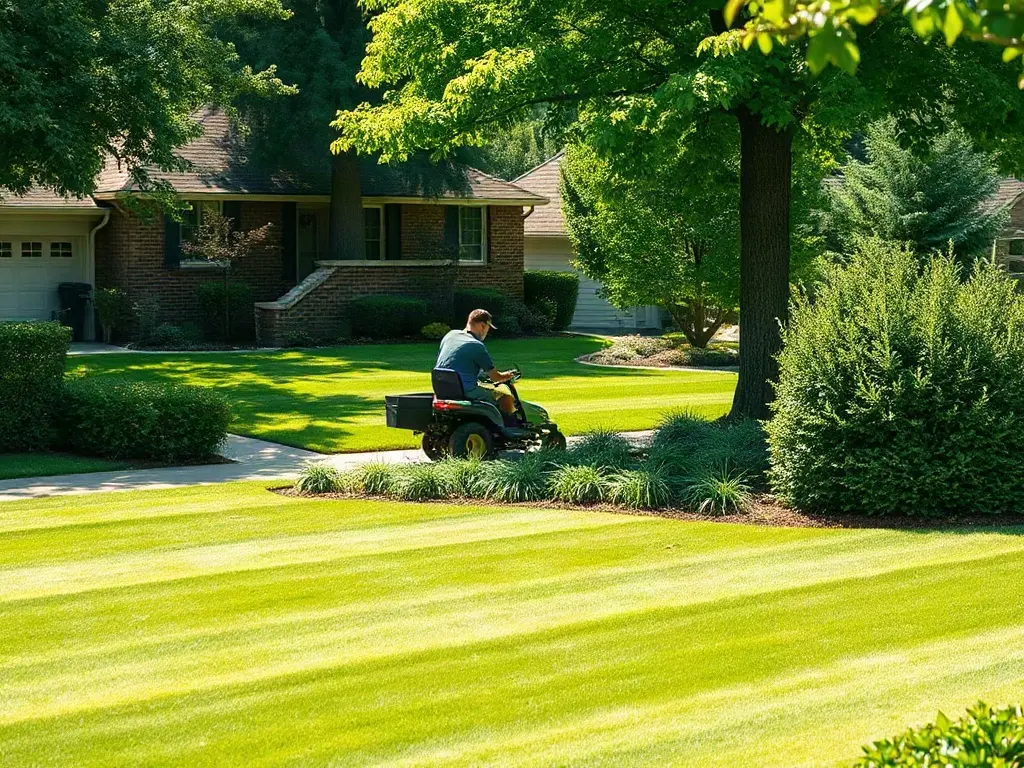
Cut quality wins customers; stripes just amplify a good mow. A clean, even cut at the right height sets the base impression a client judges you on, and striping adds visual polish on top of that. Poorly executed stripes on a rough cut actually hurt you, because crooked lines draw the eye to sloppiness. Sell the clean cut first, stripes second.
- Cut quality is the baseline every customer judges; striping is a visual bonus that only works on top of a clean mow.
- Stripes are an optical effect from bent grass blades reflecting light, not a separate turf condition.
- Cool-season turf like fescue and bluegrass at 3 to 3.5 inches stripes best; short, stiff warm-season grass fights it.
- Crooked or wavy stripes look worse than no stripes because they highlight inconsistency.
- Competing on cut quality and presentation, not price, is how you keep margin on a mowing route.
Cut quality wins customers; the stripe pattern amplifies it. So when operators ask whether stripe pattern or cut quality wins lawn customers, the honest answer is that a clean, even cut at the right height sets the impression a client actually judges you on, and striping is polish on top. Stripes make a good mow look great. They don't rescue a bad one — a rough cut under crooked lines looks worse than a plain, tidy mow.
That distinction matters because it changes what you promise and what you charge for. Below is how the two stack up, why cut quality is the safer universal promise, and how to turn presentation into pricing power instead of a race to the bottom.
Why cut quality sets the impression before stripes ever show up
Cut quality is what every customer sees first, on every lawn, regardless of grass type. An even cut with no scalping, no ragged tips from dull blades, and clean edges is the baseline. Striping is an optical effect — grass blades bent in opposite directions reflect light differently — layered on top of that baseline.
The NC State TurfFiles turf program and other university sources tie the two together: consistent height, sharp blades, and proper deck setup drive both a clean cut and clean stripes. You can't have sharp stripes without a sharp cut. The reverse isn't true — you can deliver a great cut with no stripes at all.
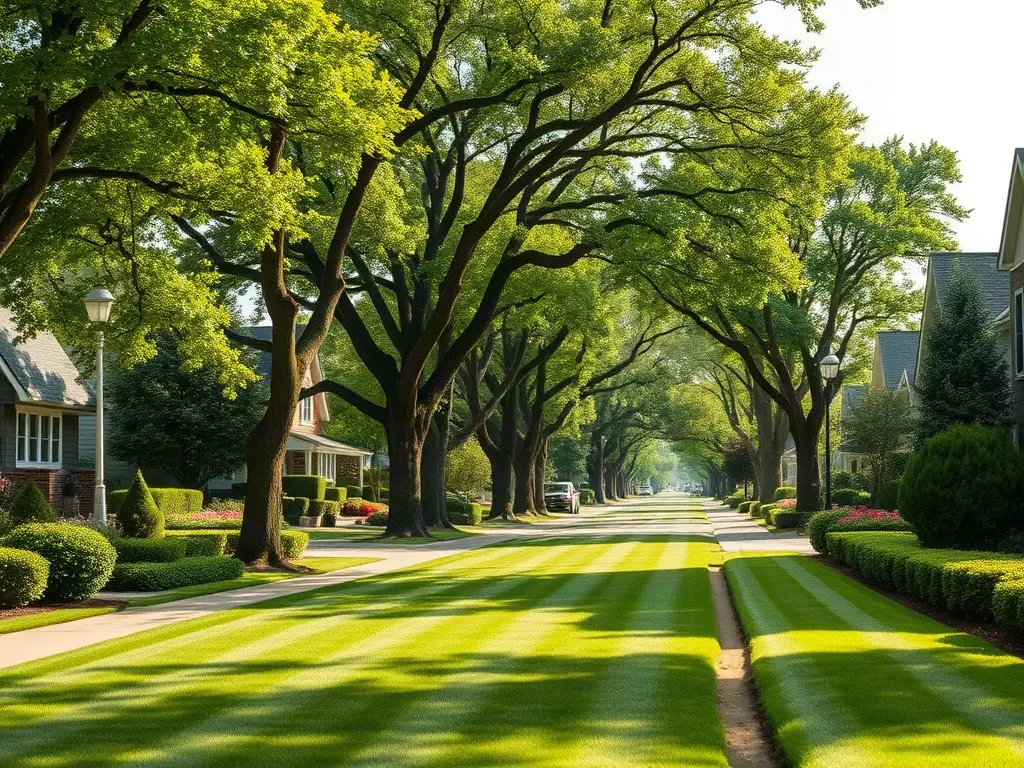
Stripe visibility is strongest on higher-cut cool-season turf like fescue and bluegrass, ideally around 3 to 3.5 inches, because taller leaf gives more surface to catch light. Warm-season grasses like bermuda and zoysia fight it — stiff blades, cut low, don't bend and hold the pattern. On those lawns, promising crisp stripes sets you up to disappoint. A clean cut, you can promise anywhere.
Is lawn mowing a commodity business, or not?
Lawn mowing becomes a commodity business only if you let it — the moment your finished product looks identical to the next guy's, price is the only thing left to compete on. Presentation is the escape hatch. A consistently clean cut, tidy edges, and a crisp pattern where the turf allows give customers a visible reason to see you as different, not interchangeable.
That's why the smart 2026 positioning is "clean cut first, crisp stripes when the lawn allows." Cut quality is the baseline you deliver on 100% of your accounts. Stripes are the differentiator you deliver where turf type and height cooperate. Marketing stripes alone backfires on half your route; marketing reliability and finish travels everywhere.
How to talk about it so customers actually get it
Customers don't speak turf. Phrases like "looks sharp," "finished well," and "great curb appeal" travel further than leaf-height jargon. Visible stripes are useful precisely because they communicate care — they signal consistency and attention without you saying a word. Use the stripe as proof of the promise, not the promise itself.
Does adding more customers make a lawn business more profitable?
Adding more customers makes you more profitable only if the new work is tight, priced right, and finished to a standard people will pay to keep. Volume at a commodity price just multiplies low-margin stops and burns your crew. Fifteen well-priced lawns on a dense route beat thirty cheap ones scattered across town.
Here's a worked example. Say you run a solo route mowing 5 lawns a day at $55, netting maybe $30 each after fuel and time — $150/day of margin. Now hold the count and raise your standard: sharp blades, edges every visit, stripes on the fescue accounts, and a price of $70 because the finish justifies it. Same 5 lawns, $45 net each, $225/day. You added $75 a day — 50% more margin — with zero new customers and zero new windshield time.
What actually happens when you raise lawn care prices
When you raise lawn care prices on well-served accounts, you usually lose a few of the most price-sensitive customers and keep the ones who value the result — and your total margin goes up even with a smaller list. The customers who leave over $10 were the ones grinding your margin anyway. The ones who stay are the ones who noticed the clean cut.
The failure mode is raising price while your product looks like everyone else's. If nothing about your cut or presentation stands out, price is the only variable, and you'll churn. Fix the finish first, then price to it. I dug into this more in why you can't charge more than the guy down the street — the short version is you can, once your work gives them a reason.
What is a lawn care route worth, and how density decides it
A lawn care route is worth far more when it's dense, because the money is in mowing time, not drive time. Two lawns on the same street let you park once and knock out both; two lawns ten minutes apart cost you fuel, wear, and a chunk of billable day between them. Route density, not raw customer count, drives what the route earns.
Before you quote, measure the lawn accurately so you're pricing the real mowing time, edge detail, and whatever the pattern will actually add. That's exactly where Mower Math fits — it measures any lawn from aerial imagery and prices from your own costs, no site visit, and its Find Neighbors view shows every address near a job so you can build density instead of chasing scattered stops.
Should I buy another truck or tighten my route?
Tighten your route before you buy another truck, almost every time. A second truck adds a payment, insurance, maintenance, and usually a second wage — fixed cost that only pays off when it's full of tight work. Most solos and small crews have 20 to 40% of slack hiding in drive time and loose scheduling. Squeeze that out and raise prices before you take on a whole new set of fixed costs.
How do I stop competing on price in lawn care?
Stop competing on price by making your finished lawn look like a decision, not a coincidence. Cut quality is the promise; stripes and clean edges are the proof; an accurate, itemized quote is the frame that says this is a professional operation. Price-shoppers self-select out, and the customers who value a sharp result stay for years.
On the back office, running scheduling, jobs, invoicing, and client history in one place keeps that professional impression consistent as you grow. Service Penguin is the field-service platform I'd point you to for that — free for solo operators and small crews, and it scales up without forcing you onto a new system later. A clean cut and a clean invoice reinforce the same story.
Bottom line: cut quality wins the customer, stripes win the compliment, and pricing to your real finished product wins the business. Quote from an accurate measurement, deliver a clean cut every visit, and add stripes where the turf earns them.
Try Mower Math free on any address and price your next lawn from a real measurement, not a guess.
Do stripes actually make grass healthier?
No. Stripes are purely optical, created by bending grass blades in opposite directions so they reflect light differently. Turf health comes from correct mowing height, sharp blades, and proper watering and fertility. A striped lawn and an unstriped lawn cut the same way are equally healthy; only the appearance differs.
Why won't my bermuda or zoysia lawn stripe well?
Warm-season grasses like bermuda and zoysia have stiffer blades that resist bending, and they're usually cut short, so there's less leaf surface to catch light. Striping shows up strongest on higher-cut cool-season turf like fescue and bluegrass. On warm-season lawns, lead with a clean, even cut instead of promising crisp stripes.
What mowing height gives the best stripes?
Around 3 to 3.5 inches is the practical sweet spot cited by mower and turf sources, especially on cool-season lawns. Higher leaf height gives more blade surface to reflect light, which deepens stripe contrast. Cutting too short flattens the effect and reduces contrast, so raise the deck when a customer wants visible patterns.
How do I stop competing on price for mowing?
Compete on consistency and presentation instead. A reliably clean cut, sharp edges, and tidy blow-off give customers a reason to stay even when a cheaper guy knocks on the door. Price the job from an accurate measurement so your number reflects the real work, then let the finished result justify it.
References
- University turf program covering mowing height, cut quality, and healthy home lawns — NC State University TurfFiles