Should I hang door hangers near my existing customers?
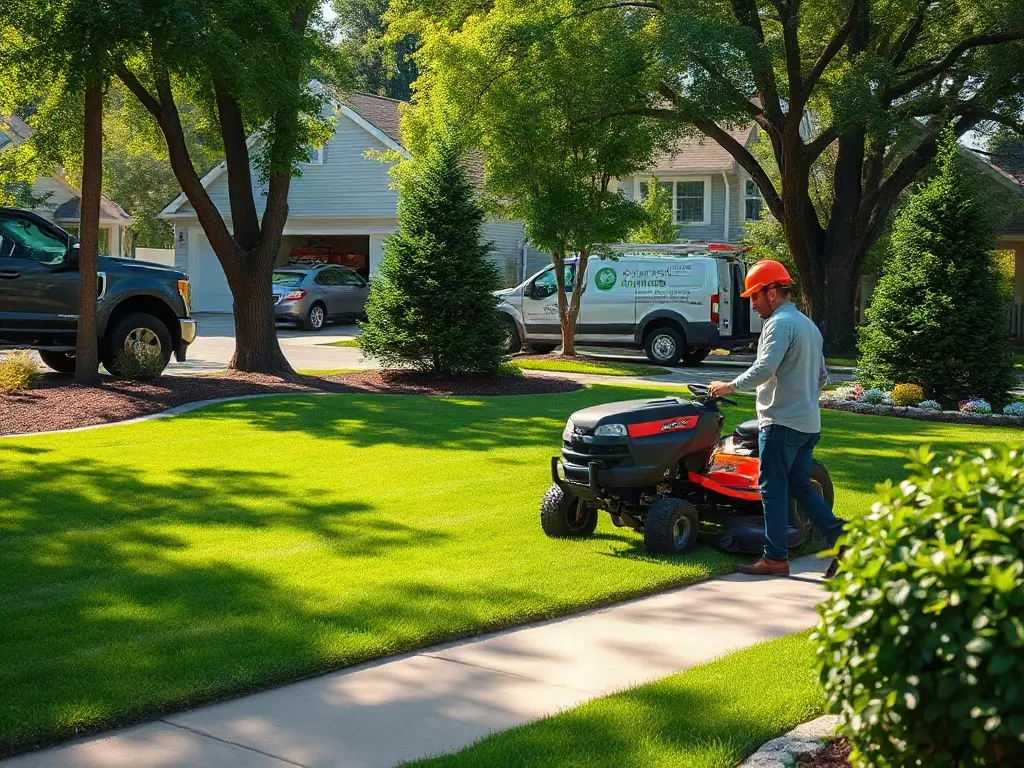
Yes. Hanging door hangers near your existing customers is one of the highest-return moves in lawn care because it clusters new jobs around stops you already drive to. Denser routes mean less windshield time, lower fuel cost per job, and more paid mowing hours. It works best when you target measured streets and follow up fast.
- Door hangers near existing customers build route density, which cuts drive time and raises paid hours per day.
- The '9 around' tactic — hitting the nine nearest houses after each stop — clusters new work around your current route.
- Spring and fall are the strongest windows because homeowners are already thinking about mowing and cleanup.
- A door hanger should name the street you already work, list one clear service, and give a dead-simple way to get a quote.
- Map and measure the target area first so hangers only go to houses that would actually add profitable density.
Yes — hanging door hangers near your existing customers is one of the smartest, cheapest sales moves in lawn care. When you drop hangers on the houses around a lawn you already mow, any new job you land sits within walking distance of a stop you already make. That means less drive time, lower fuel cost per job, and more paid mowing hours in the same workday. The tactic pays off best when you target measured streets and follow up fast.
Why door hangers near existing customers beat random streets
The whole point of hanging near existing customers is route density, not just leads. A new lawn three doors down from a current stop costs you almost nothing in travel — you're already there. A new lawn 20 minutes across town costs you gas, unpaid drive time, and a hole in your schedule.
Route-density experts frame this as a profitability play, not a lead-gen play. Every minute you're not driving is a minute you can be paid to mow. Cluster your customers tightly enough and you can fit another two or three lawns into a day without adding a single mile.
If you want to see the real cost of a spread-out route, our breakdown of how much of your day you're actually paid for lays out where the hours leak.
Do door hangers work for lawn care?
Door hangers still work for lawn care in 2026, and they work best on active routes. Design shops are still selling hanger templates built specifically for neighborhood saturation and recurring mowing routes, which tells you operators keep buying them because they convert.
The catch is that a hanger on a random street is a numbers game with bad odds. A hanger on the street where three neighbors already see your trailer every week is a warm lead — people trust the crew they've watched do good work next door.
The "9 around" tactic that builds clusters
The simplest field system is the "9 around": after you finish a lawn, leave a door hanger at the nine nearest houses before you pull the trailer out. It takes five minutes and it aims your marketing at the exact spot where a new job adds the least drive time.
Do that on every stop for a season and you're systematically thickening your route instead of scattering yourself across town chasing one-off lawns.
When is the best time to hand out lawn care door hangers?
The best times to hand out lawn care door hangers are spring green-up and fall cleanup season, when homeowners are already thinking about mowing and yard timing. Hangers around active routes hit hardest in those windows because the need is top of mind.
Grass growth drives the calendar. Cool-season lawns surge in spring and fall while warm-season lawns ramp up as soil warms — Purdue's turfgrass science program is a solid reference on those growth windows. Time your canvassing to the growth curve in your region and your hanger lands the week a homeowner decides they're done fighting the yard themselves.
What should a lawn care door hanger say?
A lawn care door hanger should say who you are, that you already work their street, one clear service, and a dead-simple way to get a quote. Keep it to a few lines — nobody reads a paragraph on a doorknob.
- Local proof: "We already mow lawns on this street" beats any slogan.
- One offer: lead with mowing, not a menu of ten services.
- A fast quote path: a phone number and a QR code, not a form to mail back.
- Skip a hard price unless every lot is identical — lot size swings the number too much.
Offer a same-day quote instead of a printed price. That's where speed wins: measure the address the day the call comes in.
How often should I hang door hangers on the same street?
Hit the same street two to three times a season — early spring, again mid-season, and once in fall — rather than blitzing it once. Repetition builds recognition, and homeowners fire their current guy or decide to stop DIY-ing at unpredictable times.
Track what you've covered so you're not guessing. Current canvassing guides recommend mapping target areas, walking efficient delivery paths, and logging which streets are done — a simple spreadsheet or route map keeps you from double-covering one block and missing another.
Map and measure before you walk
The most actionable move is to map and measure the target area before you print a single hanger, so they only land on houses that would add profitable density. This is where Mower Math's Find Neighbors earns its keep — it pulls every address within a half mile of a stop from aerial imagery, so you can see exactly which houses cluster around your route and even measure those lawns before you knock.
Guides aimed at owner-operators peg this tactic at roughly 1 to 20 neighborhoods a season. Measuring first means the hours you spend walking go to the streets most likely to convert into tight, profitable clusters.
Are door hangers or Facebook ads better for lawn care?
Door hangers beat Facebook ads when your goal is route density, and ads win when your goal is broad reach. A hanger is geographically precise — you choose the exact block — while a Facebook ad scatters across a whole city and hands you leads 25 minutes apart.
For a solo operator or small crew trying to tighten a route, precision wins. You don't want more leads everywhere; you want more lawns on the streets you already drive. Door hangers do that; a broad ad set fights against it.
How many hours a week should I spend on lawn care sales?
Budget three to five hours a week on lawn care sales during the growing season, and lean it toward canvassing near existing routes. That's enough to run the "9 around" on every stop plus one focused walk of a target neighborhood.
The trick is making those hours efficient. If you spend Saturday morning walking a subdivision you already measured and mapped, every door is a candidate that would tighten your route — not a coin flip. Convert even a handful and you've turned a few unpaid sales hours into weeks of low-drive-time revenue.
Bottom line: hang door hangers near your existing customers, target spring and fall, keep the message simple, and map the area first so you're building clusters instead of chasing scattered lawns.
How many hangers do I need to hand out to land one customer?
Response rates on cold print are low, so plan on hundreds per new client, not dozens. That's exactly why hanging near existing customers beats random streets — even a low conversion rate produces jobs you can service with almost no added drive time, which changes the math on whether the effort pays.
Should I put pricing on my lawn care door hanger?
Skip a hard price unless every lawn on the street is nearly identical. Lot sizes vary enough that a printed number either scares off big lawns or underprices them. Offer a fast free quote instead, then measure the specific address before you commit to a number.
Is it legal to leave door hangers on doors?
Door hangers are generally fine because they don't go in the mailbox, which is federally protected space. Some HOAs and a few municipalities restrict door-to-door solicitation, so check local rules and watch for posted no-soliciting signs. Hangers on the doorknob avoid the mailbox problem that flyers create.
Do I need a permit to canvass a neighborhood?
Some cities require a solicitor's permit for door-to-door canvassing, even just to hang hangers. Rules vary widely by town, so call the city clerk before you spend a Saturday walking a subdivision. It's a cheap phone call versus a fine or a homeowner complaint that follows you.
References
- University turfgrass program covering mowing timing and cool- vs warm-season growth windows — Purdue University Turfgrass Science