Can I lower my lawn care price and still make money?
Yes, you can lower your lawn care price and still make money — but only on fast, tight, recurring jobs where your labor cost stays well below your billed rate. With true labor running $25–$30/hour after payroll taxes and burden, a lower price works when stop time is short and the route is dense. It fails on slow, one-off, or overgrown lawns.
- A lower price still makes money only when the job is fast, close, and recurring — never on slow or one-off work.
- True labor cost runs about $25–$30/hour after payroll taxes and burden, so a $60/person/hour floor is realistic.
- Route density beats price: a cheaper lawn two doors down can out-earn a full-price lawn 20 minutes away.
- Drive time is a real cost that must be built into the quote, even though you can't bill it as a line item.
- Discount recurring cadence, not one-off overgrown or hard-access jobs — those need higher prices, not lower ones.
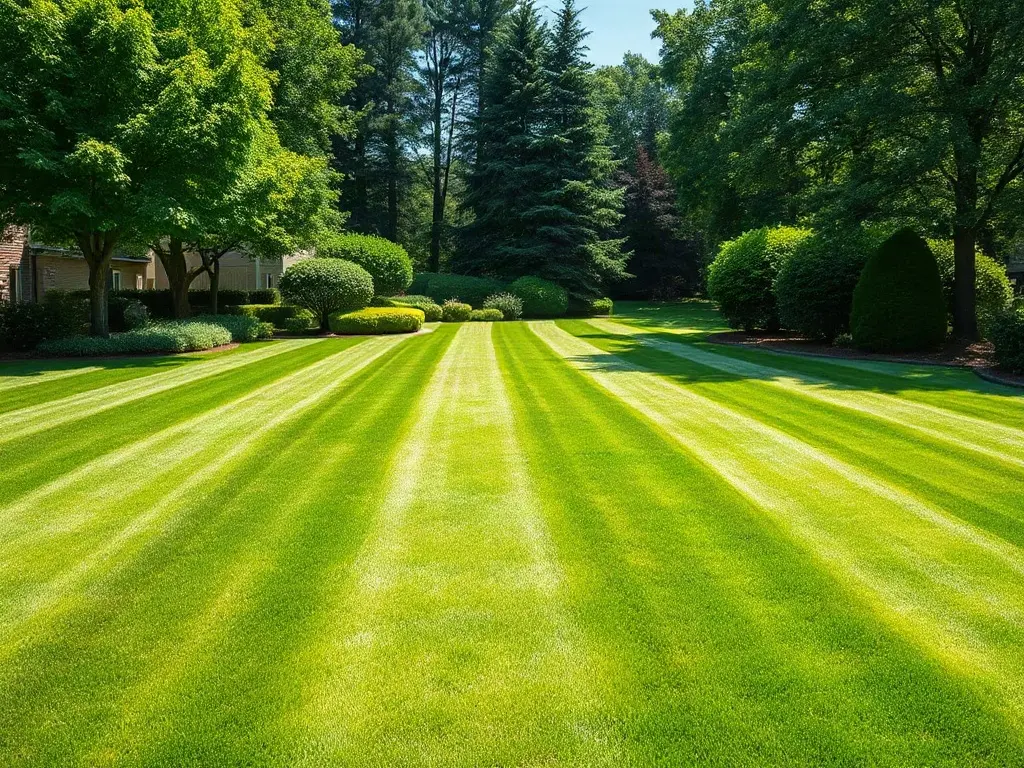
Yes, you can lower your lawn care price and still make money — but only on jobs that are fast, tight, and recurring, where your labor cost stays well under your billed rate. Once you account for a true labor cost of about $25–$30 per hour after payroll taxes and burden, plus fuel and equipment wear, a lower price works when the stop time is short and the route is dense. It falls apart on slow, one-off, or overgrown lawns that never finish at a profitable cycle time.
So the honest answer isn't a flat yes or no. It's: lower the price on the right lawns and you're fine; lower it on the wrong ones and you're funding the customer's yard. Here's how to tell them apart.
Why a lower price still works on some lawns and not others
A lower price still works when the job is fast, close, and recurring — that's the whole trick. Median grounds-maintenance wages sit around $18.50/hour, and once you add payroll taxes, workers' comp, and downtime, your real labor cost lands closer to $25–$30/hour before you've burned a drop of fuel.
That means every minute on-site costs you money whether you billed for it or not. On a fast 15-minute lawn, a slightly lower price barely dents your effective hourly. On a slow 45-minute lawn with trimming and gates, the same discount can wipe your margin out entirely.
The danger zone is discounting slow, one-off, or high-maintenance yards. Those are exactly the jobs that need a higher price, not a lower one.
What is the correct formula for pricing a lawn?
The correct formula for pricing a lawn is: estimated time on-site × your hourly target, plus a share of drive time, fuel, and overhead. Everything else is just adjusting that number for the specific yard. Early-stage solos commonly work from $45–$55/hour; established solos use $55–$70; small crews of two to five often quote $60–$80/hour.
A useful floor is about $60 per person per hour, because a one-person operation has to cover drive time, equipment depreciation, and admin out of that single number. Drop below it and you're renting your mower to the customer.
If you want the long version, our breakdown of the correct formula for pricing a lawn walks through each cost bucket. The short version: never quote a flat price without knowing the time behind it.
Should drive time be included in a lawn quote?
Yes — drive time must be included in the quote, even though you can't show it as a line item. If a lawn takes 20 minutes to mow but 15 minutes to drive to, you're really selling 35 minutes of your day. Price it on the mow time alone and you've quietly cut your rate by nearly half.
This is the single biggest reason a "cheap" price fails. The price on the invoice looks fine; the price per hour of your actual working day is a disaster because the windshield time ate it. We dig into this in our post on whether drive time belongs in a lawn quote.
The fix isn't always charging more. Often it's tightening the route so drive time shrinks — which is what makes a lower price survivable in the first place.
How route density lets you charge less and earn more
Route density is what makes a lower price profitable — pack the stops close together and the drive time that kills your hourly nearly disappears. Five lawns in a half-mile radius at a slightly discounted price will out-earn three scattered full-price lawns, because you're mowing instead of driving.
Here's a worked example. Say full price is $55 per standard quarter-acre lot:
- Scattered: 3 lawns at $55 = $165, but 45 minutes total drive time between them. Roughly 2.5 hours of your day for $165 → about $66/hour before fuel.
- Dense: 5 lawns at $48 (a small discount) = $240, with only 20 minutes total drive because they're on one street. About 2.7 hours for $240 → about $89/hour.
Same neighborhood, lower per-lawn price, and you earn 35% more per hour. That's the whole case for discounting to win a block. Mower Math's Find Neighbors feature is handy here — it shows every address within a half mile of a job you already have, so you know exactly which streets are worth a density play.
How do I quote a lawn without seeing it?
You quote a lawn without seeing it by measuring it from aerial imagery and pricing it against your own costs, then adjusting for anything the photo can't show. Turf area, drive access, and lot size all read clearly from above — enough to send a confident number without burning gas on a site visit.
This is exactly what Mower Math does: measure any address from aerial imagery and price the job from your own hourly cost, no visit required. It keeps you from the two ways operators bleed money on estimates — driving across town to look at a lawn, or guessing low because they didn't measure.
What the photo won't tell you is the stuff that changes your price the most, which brings us to the two jobs you should almost never discount.
How do I price a first cut or overgrown lawn?
Price a first cut or overgrown lawn at a premium — often 1.5 to 2 times a normal visit — because tall grass means slower passes, double-cutting, and more cleanup. Grass that's badly overgrown forces you to break the one-third rule (never remove more than a third of the blade at once), which per Michigan State University Extension means multiple mows or a much slower single pass. That time is real and belongs in the price. This is the last lawn on earth you should discount.
How do I price a sloped or hard-to-access yard?
Price a sloped or hard-to-access yard higher, because slopes mean push-mowing or slower riding, and gates or tight fences add trips and trimming. Anything that stops you from mowing at full speed is a time cost, and time is what your price protects. A yard that reads as "standard quarter-acre" from above can eat 40% more labor once you factor a steep back slope and a single narrow gate.
Should I charge by the hour or per property for lawn care?
Charge per property, but calculate that price from an hourly target — never bill open-ended hourly. Customers dislike hourly billing, and it punishes you for getting faster and better at your equipment. Estimate the minutes, multiply by your rate, and quote one flat per-visit number.
Regional spread is wide, so know your market: 2026 pricing guides put the Northeast around $65–$95 per visit and the South around $25–$50, with standard quarter-acre lots often landing $45–$70. A "low" price in one city is simply the going rate in another. To track whether your quoted times are actually holding up, log job durations in a scheduling tool like Service Penguin — free for solo operators and small crews — so you're pricing off real data, not guesses.
The bottom line on cutting your price
You can lower your lawn care price and still make money when the lawn is fast, the street is dense, and the work repeats every week — that's when a smaller per-lawn number still clears a strong hourly. You lose money when you discount slow, scattered, overgrown, or hard-access jobs that never finish at a profitable cycle time. Price from your costs, protect your drive time, and only discount to buy density.
How do I know if a discounted lawn is still profitable?
Divide the price by your realistic total time on that job — including drive time — then subtract your true labor cost of about $25–$30/hour plus fuel and equipment wear. If what's left clears your overhead and leaves a margin, it's profitable. If the mow-plus-drive time drags your effective hourly under roughly $60 per person, the discount is costing you.
Should I lower my price to win a whole neighborhood?
Yes, a modest discount to lock several homes on one street usually pays off because drive time between stops nearly disappears. Five lawns in a half-mile radius at a slightly lower price often beats three scattered full-price lawns. Just protect the cadence — bill them recurring, not one-off — so the density stays intact all season.
Is charging by the hour or per property better for lawn care?
Quote per property, but price it from an hourly target. Customers hate open-ended hourly bills and you get punished for getting faster. Estimate the time, multiply by your rate (early-stage solos often use $45–$55/hour, established ones $55–$70), and quote a flat per-visit number. Your hourly math protects you; the flat price sells.
What's the lowest price I should ever quote a lawn?
Your floor is the price where your effective hourly — after drive time, fuel, and payroll burden — still clears about $60 per person per hour. Below that you're renting your equipment to the customer. Regional spread is wide, so a $35 lawn that's normal in the South may be a loss in the Northeast where visits run $65–$95.
References
- University research on proper mowing height and frequency (the one-third rule), which drives how much time an overgrown lawn actually takes — Michigan State University Extension